The low burst fade mullet is one of the most eye-catching hairstyles for men who want a modern haircut with a bold, textured finish. This style combines a rounded fade around the ears with longer hair at the back, creating the signature mullet silhouette. In 2026, men are experimenting with different variations, including curly tops, textured layers, straight hair, sharp line-ups, and creative designs.
The best part about a low burst fade mullet is its versatility, as it can be customized to match different hair types, face shapes, and personal preferences. Whether you prefer a subtle everyday look or a more daring appearance, this haircut offers an excellent balance of individuality, modern barbering, and classic mullet character.
What Is a Low Burst Fade Mullet?
A low burst fade mullet combines a low-positioned burst fade around the ears with longer hair at the back. The fade follows a curved, semicircular shape around the ear, creating a smooth transition between the shorter sides and the fuller hair above. Unlike a traditional mullet, this modern variation places greater emphasis on the fade and the shape of the sides. The top can be short, curly, textured, or voluminous, depending on the desired result.
The back is usually left longer to preserve the mullet’s recognizable silhouette. Some men prefer a subtle difference between the top and back, while others choose a more dramatic contrast.
15 Low Burst Fade Mullet Styles for Men
Classic Low Burst Fade Mullet

The classic low burst fade mullet is ideal for men who want a balanced combination of traditional mullet styling and modern barbering. The hair around the ears is gradually faded in a curved pattern, while the back remains longer.
The top can be kept at a medium length to create a natural connection between the front and back. This variation works well for everyday wear because it looks fashionable without relying on complicated styling.
Curly Low Burst Fade Mullet

The curly version is perfect for men who want to highlight their natural texture. The curls provide volume on top, while the burst fade creates a clean outline around the ears.
Keeping additional length at the back enhances the mullet shape. Curl cream can help define individual curls and reduce frizz without making the hairstyle appear stiff.
Textured Low Burst Fade Mullet

A textured top gives the haircut a relaxed and contemporary appearance. The barber uses careful layering to create separation and movement, allowing the hair to look fuller without becoming excessively bulky.
This style suits men who prefer an effortless finish. A small amount of matte styling product can emphasize the texture while keeping the hair flexible throughout the day.
Low Burst Fade Mullet with Fringe

A fringe adds extra character to the front of the haircut. Depending on your preference, the fringe can fall naturally across the forehead or be styled slightly upward for additional volume.
The curved fade keeps the sides clean, while the longer back preserves the mullet silhouette. This combination is particularly attractive for men who want a fashionable hairstyle with a distinctive front profile.
Low Burst Fade Mullet with Beard

Combining the haircut with a beard creates a stronger, more masculine appearance. The barber can blend the sideburns into the faded section so the transition between the haircut and facial hair looks smooth.
A short boxed beard provides a neat finish, while a fuller beard creates a bolder contrast. Keeping the beard edges tidy helps maintain a balanced overall appearance.
Straight Hair Low Burst Fade Mullet

Men with straight hair can achieve a sleek version of the style by keeping the top lightly layered and the back slightly longer. The fade adds definition around the ears, preventing the hairstyle from looking too heavy on the sides.
A lightweight styling cream can help control flyaways while maintaining natural movement. This variation is ideal for men who prefer a cleaner, less curly finish.
Low Burst Fade Mullet with Spiky Top

A spiky top introduces extra height and attitude. The hair is cut into short, textured sections that can be styled upward with a suitable product.
The rounded burst fade keeps the sides neat, while the longer back adds the characteristic mullet shape. This style works particularly well for men who enjoy bold, energetic hairstyles.
Low Burst Fade Mullet with Hard Part

A hard part creates a defined line that separates the top from the side. This small detail gives the haircut a sharper appearance and adds an element of precision.
The hard part can be subtle or more noticeable, depending on the desired look. It works best when the surrounding hair is neatly shaped and the fade is blended carefully.
Low Burst Fade Mullet with Wavy Hair

Natural waves add movement and softness to the haircut. The top can be left medium-length to allow the waves to form naturally, while the back remains longer for a recognizable mullet finish.
The curved fade creates contrast around the ears without overpowering the texture. A lightweight leave-in conditioner can help control frizz and maintain the natural wave pattern.
Low Burst Fade Mullet with Blonde Highlights
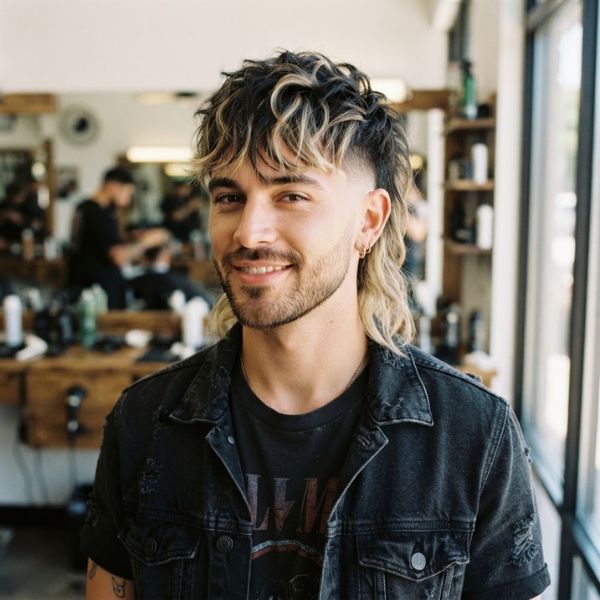
Blonde highlights can make the layers more visible and add dimension to darker hair. The lighter strands catch the light, emphasizing the movement of the top and the longer back.
For a balanced result, the highlights should complement your natural hair color. The sides can remain natural, allowing the top and back to become the main visual features.
Low Burst Fade Mullet with Temple Design
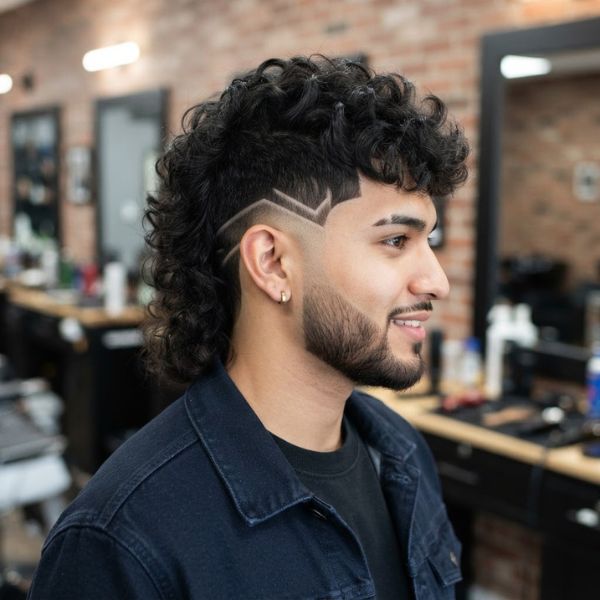
A temple design adds a personalized detail to the haircut. A simple line or geometric pattern can be shaved into the faded area near the temple without changing the overall mullet shape.
This option is suitable for men who want a more expressive look. Keeping the design relatively simple helps it complement the haircut rather than compete with the texture and length.
Short Low Burst Fade Mullet
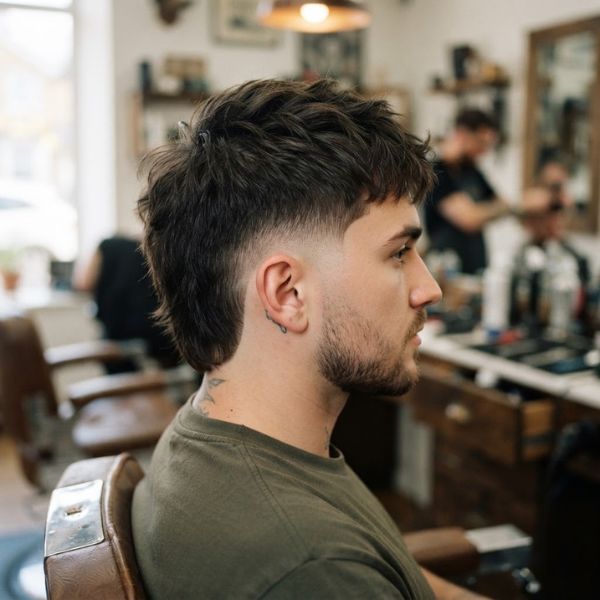
A short version offers the mullet silhouette without requiring substantial length. The top and back remain relatively compact, while the burst fade creates a clean transition around the ears.
This variation is particularly practical for men who want a distinctive haircut that remains easy to manage. Minimal styling is usually enough to maintain its shape.
Long Low Burst Fade Mullet

The longer version emphasizes the contrast between the short sides and the extended back. The top can be layered to connect the different lengths, creating a more flowing silhouette.
This style requires additional maintenance, particularly if the back tends to become bulky or lose its shape. Regular trims help maintain the intended proportions.
Low Burst Fade Mullet with Messy Texture

Messy texture gives the haircut a relaxed, slightly rebellious character. The top is styled loosely, allowing individual sections to move naturally rather than forming a perfectly structured shape.
The fade provides a clean foundation, while the longer back adds personality. A matte clay or lightweight texturizing product can help achieve this finish without creating excessive shine.
Low Burst Fade Mullet with Clean Line-Up

A clean line-up adds sharp definition around the forehead and temples. This detail contrasts with the longer back and textured top, making the haircut look carefully groomed.
The style works with straight, wavy, and curly hair, provided the hairline is shaped to complement the individual’s natural features. Regular touch-ups help preserve the crisp finish.
Why Is the Low Burst Fade Mullet Popular in 2026?
The low burst fade mullet appeals to men because it combines individuality with a modern, carefully blended fade. Rather than choosing a traditional short haircut, men can retain additional length at the back while keeping the sides clean.
Another advantage is customization. The same basic haircut can be adapted for curly, straight, thick, or wavy hair. Men can also adjust the top length, add a fringe, or choose subtle designs to create a distinctive appearance.
The low fade placement makes the style more balanced than some extreme variations. It offers a noticeable silhouette without requiring the sides to be shaved excessively high.
Best Hair Types for This Haircut
The low burst fade mullet works with a variety of hair textures. Curly hair creates volume and a more dramatic shape, while straight hair produces a cleaner, more structured appearance.
Wavy hair offers a natural middle ground, adding movement without requiring extensive styling. Thick hair can support a fuller mullet, although layering may be necessary to remove excess weight. Men with fine hair can also try this style. A shorter top with carefully controlled layering may help create the appearance of texture and volume.
Choosing the Right Mullet Length
The ideal length depends on your personal style and daily routine. A short mullet is easier to manage and generally requires less styling, while a longer mullet creates a more noticeable silhouette. Medium-length options provide a practical balance between the two. They preserve enough hair at the back to show the mullet shape without requiring extensive daily maintenance.
Before your appointment, tell your barber how much length you want to retain at the back. Showing a reference photograph can help communicate the desired proportions.
How to Maintain a Low Burst Fade Mullet
Maintaining a low burst fade mullet involves keeping the fade clean and the longer sections properly shaped. The hair around the ears may need trimming every two to three weeks if you want the fade to remain particularly sharp. The top and back require attention as they grow. Regular trims help prevent uneven bulk and preserve the intended silhouette.
Choose hair products according to your texture. Curl cream can enhance curls, while matte clay can add separation to straight or wavy hair. Avoid applying excessive product, as it can make the hair appear heavy.
Best Styling Products for a Mullet
A lightweight texturizing cream is useful for creating movement without adding too much weight. Men with straight or wavy hair may prefer matte clay for stronger definition. For curly hair, moisturizing products help maintain softness and reduce frizz. A leave-in conditioner can be particularly helpful when the curls become dry.
The goal is to enhance your natural texture rather than completely change it. Begin with a small amount of product and adjust as necessary.
Which Face Shapes Suit This Haircut?
A low burst fade mullet can be customized for oval, square, round, and longer face shapes. Oval faces can generally accommodate a wide range of variations because their proportions are naturally balanced. For round faces, a little extra height on top may create a more elongated appearance. Square faces can benefit from textured layers that complement the jawline.
Men with longer faces may prefer a moderate top height and balanced back length. A skilled barber can adjust the shape to suit your facial proportions.
Low Burst Fade Mullet with Facial Hair
Facial hair can complement the mullet by adding definition around the lower face. Short stubble creates a subtle finish, while a fuller beard produces a stronger contrast. The sideburns should be blended carefully into the fade. This prevents the haircut and beard from appearing disconnected.
If you prefer a cleaner appearance, a smooth-shaven face can also work well. The hairstyle itself provides enough texture and contrast to stand out without facial hair.
Common Mistakes to Avoid
One common mistake is removing too much hair from the back. Doing so can weaken the mullet silhouette and make the haircut look more like a standard fade. Another mistake is creating an uneven burst fade. Because the fade curves around the ears, the blending needs to be consistent on both sides.
Ignoring the top texture can also affect the result. Your barber should consider how your hair naturally falls before choosing the final length and layering technique. Finally, avoid choosing a dramatic design or extreme length without considering your lifestyle and workplace requirements.
Is This Haircut Suitable for Everyday Wear?
Yes, the low burst fade mullet can work for everyday wear when the length and styling are appropriate for your routine. A short or medium version is usually easier to manage than a longer, heavily layered variation.
For professional environments, you may prefer a subtle mullet with a neat top and understated fade. Creative settings may allow more freedom with texture, color, and designs. The key is choosing a version that feels comfortable and suits your daily activities.
FAQ’s:
What is a low burst fade mullet?
A low burst fade mullet combines a curved fade around the ears with longer hair at the back, creating a modern version of the traditional mullet.
Is a low burst fade mullet good for curly hair?
Yes, curly hair adds natural volume and texture, making it an excellent match for this haircut. Curl cream can help maintain definition and reduce frizz.
How often should I trim a low burst fade mullet?
A barber visit every two to three weeks can help maintain a sharp fade. The longer back may need trimming less frequently, depending on your preferred length.
Can I get a low burst fade mullet with straight hair?
Yes, straight hair works well with this style. Layering and texturizing can create movement while the burst fade provides a clean finish.
Is a low burst fade mullet professional?
It can be suitable for professional settings when the fade is neat, the top is controlled, and the back length is kept balanced. A subtle variation generally looks more conservative than an extreme mullet.
Conclusion
Choosing the best low burst fade mullet depends on your hair texture, preferred length, face shape, and maintenance routine. Before visiting your barber, decide whether you want a subtle silhouette or a more dramatic contrast between the sides and back. Discuss the fade placement, top length, and neckline to achieve balanced proportions.
Use suitable styling products to enhance your natural texture without making the hair stiff or greasy. Regular maintenance will keep the curved fade neat and the mullet shape defined. With the right cut and simple grooming habits, you can enjoy a personalized hairstyle that feels modern, expressive, and practical for everyday life.