The low fade mullet is a modern men’s haircut that combines clean, faded sides with longer hair at the back. It offers a balanced look that feels stylish without appearing too dramatic. Whether you have straight, wavy, or curly hair, this haircut can be adapted to suit your hair texture, face shape, and personal style.
Unlike a high fade, which removes more hair from the sides, a low fade starts close to the ears and neckline. This creates a softer transition while keeping more fullness around the temples. The longer back gives the haircut its distinctive mullet shape.
What Is a Low Fade Mullet?
A low fade mullet combines a low fade on the sides with longer hair at the back. The fade gradually blends the hair near the ears and lower sides, while the back remains noticeably longer. The top can be short, textured, wavy, curly, or styled with a fringe.
This haircut works well for men who want a modern appearance without losing the distinctive shape of a traditional mullet. The low fade keeps the sides neat, while the longer back adds movement and personality.
The final result depends on the length of the top, the amount of hair left at the back, and how smoothly the fade blends into the rest of the haircut.
45 Modern Low Fade Mullet Styles
Classic Low Fade Mullet
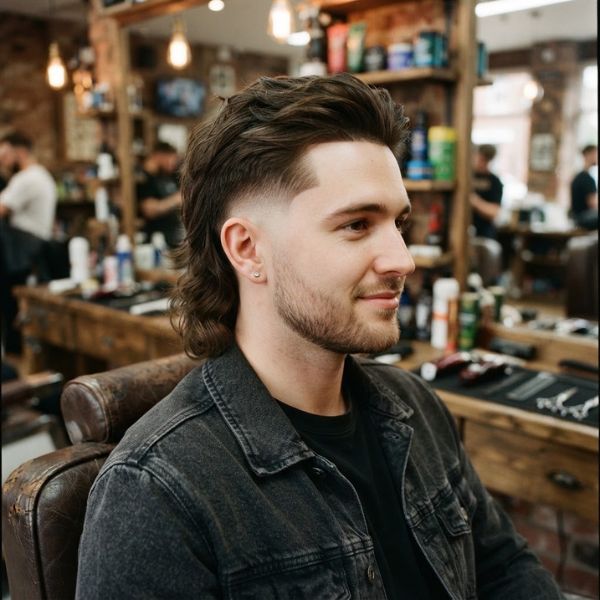
The classic low fade mullet is a great starting point if you want a balanced and versatile haircut. The sides gradually fade around the ears, while the top and back retain enough length to create the traditional mullet silhouette.
This style works with different hair textures and does not require excessive styling. A small amount of matte paste can add definition to the top while keeping the back natural.
Low Skin Fade Mullet
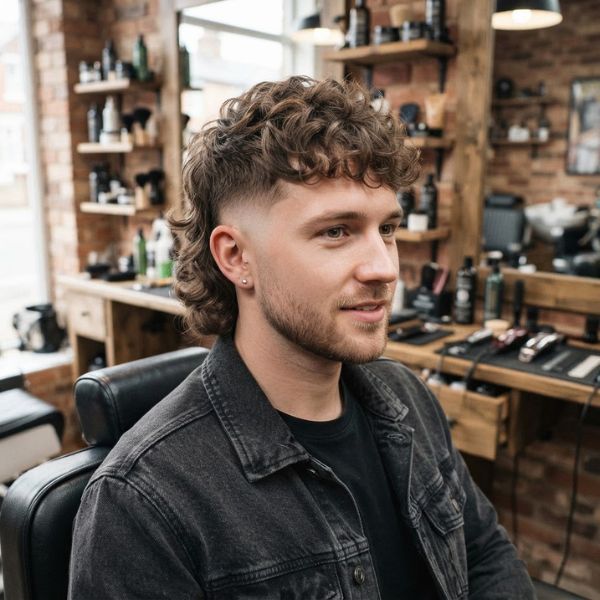
The low skin fade mullet creates a sharper contrast between the sides and the longer hair. The fade gradually blends down to the skin near the ears and lower hairline, while the back remains longer.
This variation looks clean and modern, making it a good choice for men who prefer a more defined haircut. Regular barber visits help maintain the smooth fade and prevent the sides from looking overgrown.
Low Taper Fade Mullet

The low taper fade mullet offers a softer and more understated appearance. Instead of fading a large section of the sides, the barber tapers the hair around the sideburns and neckline while preserving more length elsewhere.
This style is suitable for men who want a professional-looking haircut with a subtle mullet shape. It is also a practical option if you prefer a natural transition rather than a strong contrast.
Low Burst Fade Mullet

The low burst fade mullet features a curved fade around the ears. The hair gradually becomes shorter in a semicircular pattern, leaving the back longer and preserving the characteristic mullet shape.
This design adds a modern edge without requiring an extremely high fade. It works particularly well with textured tops, curly hair, and hairstyles that benefit from extra definition around the ears.
Low Drop Fade Mullet

The low drop fade mullet follows the natural curve of the head, dropping slightly behind the ears. This creates a smooth outline that connects the sides with the longer back.
It is a useful option for men who want a more customized haircut. The barber can adjust the drop and back length to create either a subtle everyday style or a more dramatic mullet.
Textured Low Fade Mullet

The textured low fade mullet combines clean sides with a top that has movement and separation. The barber uses scissors or texturizing techniques to prevent the hair from looking flat or overly uniform.
A matte styling product can help define individual sections without making the hair appear greasy. This style is especially suitable for men who prefer a relaxed, slightly messy finish.
Curly Low Fade Mullet
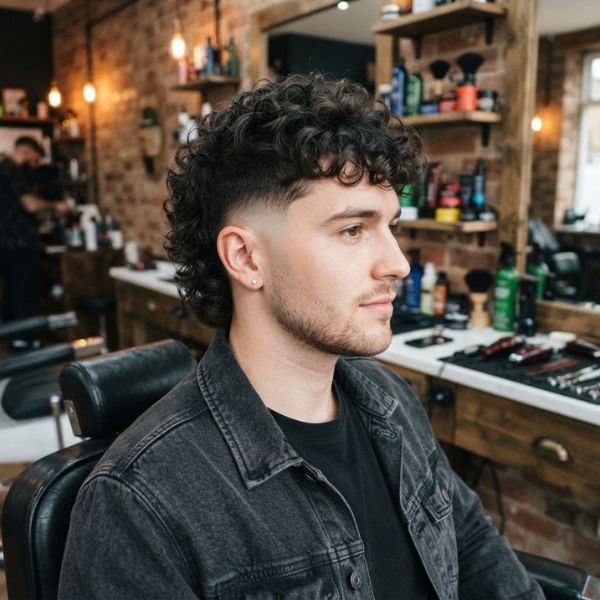
The curly low fade mullet allows natural curls to become the main feature of the haircut. The low fade keeps the sides tidy, while the curls on top and at the back provide volume and shape.
The barber should consider the natural curl pattern and how much the hair shrinks when dry. A lightweight curl cream can reduce frizz and help the curls maintain their definition without weighing them down.
Wavy Low Fade Mullet
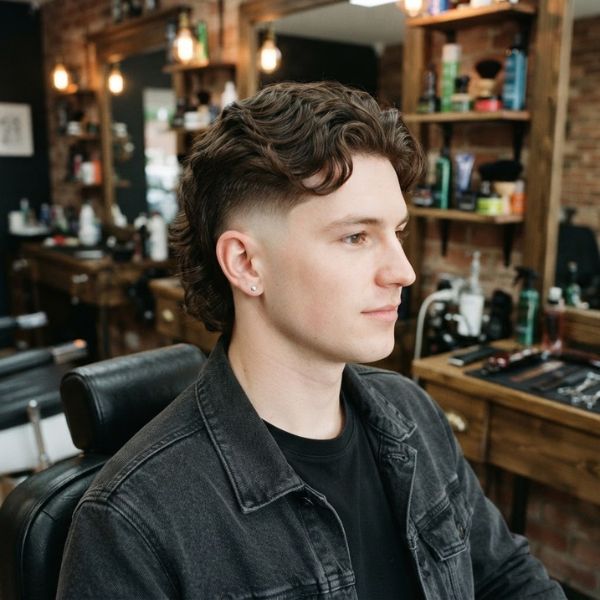
The wavy low fade mullet is ideal for men with natural waves. The sides remain neat, while the top and back retain enough length for the waves to form a flowing shape.
This variation creates movement without requiring perfectly structured styling. A lightweight mousse or sea salt spray can enhance the natural texture, although the best product depends on your hair’s dryness and thickness.
Short Low Fade Mullet

The short low fade mullet is a practical choice if you like the mullet shape but do not want long hair at the back. The top stays relatively short, and the back has just enough length to create a visible difference.
It is easier to manage than longer versions and works well for men who prefer simple daily grooming. A small amount of styling cream can add texture without making the haircut look stiff.
Long Low Fade Mullet

The long low fade mullet creates a stronger contrast between the short sides and the longer back. The additional length gives the haircut more movement and makes the mullet shape easier to recognize.
This variation can look particularly good with wavy or thick hair. Regular trimming helps maintain the outline, while conditioner can keep the longer sections manageable and reduce tangling.
Low Fade Mullet With Fringe

A low fade mullet with fringe adds another styling element at the front. The fringe can be worn forward, slightly separated, or swept to one side, depending on your hair texture and preferred look.
This variation can balance a longer face or add visual interest to a simple haircut. Ask your barber to choose a fringe length that works with your forehead, hairline, and natural growth direction.
Textured Crop Low Fade Mullet

The textured crop low fade mullet combines a short, choppy top with a longer back. The crop gives the front a defined appearance, while the mullet section adds length and movement behind the head.
This is a useful option if you prefer a haircut that looks structured without needing a complicated routine. A small amount of matte clay can separate the top layers and maintain a natural finish.
Low Fade Mullet With Beard

Pairing a low fade mullet with a beard creates a connected and masculine appearance. The barber can blend the sideburn area into the beard while keeping the fade low and the back longer.
The beard can be short and neatly shaped or fuller, depending on your preference. Maintaining the beard neckline and cheek lines helps keep the overall style looking intentional rather than unkempt.
Low Fade Mullet With Natural Neckline

A low fade mullet with a natural neckline keeps the back looking softer and less sharply outlined. The sides are faded near the ears, while the lower hairline follows a more natural shape.
This approach is ideal for men who prefer a relaxed appearance rather than a highly sculpted finish. It can also make the haircut look more natural as it grows out between barber appointments.
Layered Low Fade Mullet

The layered low fade mullet uses different lengths through the top and back to create movement and reduce bulk. The low fade keeps the sides controlled, while the layers give the longer sections a more flowing shape.
This style can work well for thick, wavy, or straight hair, depending on how the layers are cut. Ask your barber to preserve enough length at the back so the mullet remains recognizable after texturizing.
Low Fade Mullet vs. Other Fade Styles
A low fade mullet keeps the fade close to the ears and lower sides. This creates a subtle finish and preserves more hair around the upper sides of the head.
A mid fade mullet starts higher, creating a stronger contrast between the faded sides and the longer top and back. It may suit men who want a more noticeable, modern appearance.
A high fade mullet removes more hair from the upper sides. This creates a bold silhouette but can make the haircut look more dramatic.
A low taper mullet focuses on the sideburns and neckline rather than fading a larger section of the sides. It is a good option for a softer and more conservative appearance.
A burst fade mullet features a curved fade around the ears. Its rounded shape can highlight curls and help create a more distinctive outline.
The right option depends on how much contrast you want, your hair texture, and how frequently you can maintain the haircut.
Which Low Fade Mullet Works Best for Your Hair Type?
Straight Hair
Straight hair can make the outline of a low fade mullet look sharp and defined. Adding texture or layers helps prevent the top and back from appearing flat. A lightweight matte product can provide separation without making the hair stiff.
Wavy Hair
Wavy hair adds natural movement to a low fade mullet. Keeping enough length at the top and back allows the waves to form naturally. Use a lightweight styling product if you want more definition without losing movement.
Curly Hair
Curly hair can give a low fade mullet extra volume and personality. The barber should work with the natural curl pattern instead of cutting the hair as though it were straight. A curl cream or leave-in conditioner can help manage dryness and frizz.
Thick Hair
Thick hair often benefits from carefully placed layers to reduce unnecessary bulk. Your barber should remove weight where needed while preserving enough length to maintain the mullet shape.
Fine Hair
Fine hair can work with a low fade mullet when the cut is designed to create the appearance of fullness. Avoid excessive thinning, which may make the ends look sparse. A lightweight volumizing product can help lift the top without weighing it down.
How to Choose a Low Fade Mullet for Your Face Shape
Men with oval faces can usually wear a wide range of low fade mullet variations. The top and back can be adjusted according to personal preference.
For round faces, a little extra height and texture on top can create a more elongated appearance. Keeping the sides controlled may help maintain a balanced silhouette.
Square faces can work well with either a textured or classic low fade mullet. Softer layers may reduce the appearance of overly sharp angles, while a precise fade creates a clean finish.
Long faces may benefit from a more balanced top and moderate back length. Avoid adding too much height if you prefer a less elongated appearance.
Heart-shaped faces can suit styles with natural texture and balanced volume. A fringe may also help change the visual proportions of the forehead and face.
Your natural hairline, head shape, and personal style matter just as much as face shape. A barber can adjust the haircut to suit your individual features.
What to Tell Your Barber
Clear instructions can help you get the low fade mullet you want. Explain that you want the fade to start low around the ears and neckline, rather than climbing too high on the sides.
Tell your barber how much length you want to keep at the back. If you want a subtle mullet, request a softer transition. If you prefer a more dramatic style, ask for a stronger difference between the sides and back.
Discuss the top length and texture as well. You might prefer a short crop, a messy textured finish, natural curls, or longer waves. Bringing a reference photo can help your barber understand the exact shape you have in mind.
Before the haircut begins, confirm whether you want a skin fade or a softer blend. These finishes can produce noticeably different results.
Styling Tips for a Low Fade Mullet
Start with clean hair and choose a styling product that suits your texture. Matte clay or paste can help define straight and thick hair, while curl cream may be more suitable for naturally curly hair.
Use a blow dryer on a moderate setting if you want extra volume at the top. Direct the airflow in the direction you want the hair to sit, and avoid excessive heat that can dry out the hair.
For a relaxed finish, use your fingers to shape the top instead of forcing every section into place. The mullet usually looks best when the top and back have natural movement.
Avoid applying too much product to the longer back sections. Heavy products can make the hair appear greasy and weigh down the shape. Start with a small amount and add more only if needed.
How to Maintain a Low Fade Mullet
A low fade mullet needs regular maintenance to keep the sides looking clean. Many men prefer to visit a barber every two to four weeks, although the ideal schedule depends on how quickly their hair grows and how sharp they want the fade to look.
The longer back may need less frequent trimming, but occasional shaping can prevent the ends from becoming uneven. If you want to grow the mullet out, tell your barber to preserve the back length while cleaning up the sides.
Use shampoo according to your scalp and hair needs, and apply conditioner when necessary, especially if the back is long or prone to dryness. Curly and wavy hair may benefit from additional moisture.
At home, avoid trimming the fade yourself unless you have the right experience and tools. Small mistakes around the ears or neckline can change the shape of the haircut.
Common Low Fade Mullet Mistakes to Avoid
One common mistake is asking for a fade that is too high when you want a low fade. Show your barber where you want the fade to begin and use a reference photo if possible.
Another mistake is leaving too little length at the back. The mullet needs a visible difference between the sides and back, so make sure your barber understands how much length you want to preserve.
Over-texturizing can also make the haircut look thinner than intended. This is especially important for fine hair. Ask for layers that suit your natural density rather than removing too much hair.
Finally, do not ignore the relationship between the top, sides, and back. A good low fade mullet should look balanced from the front, side, and rear.
Frequently Asked Questions:
What Is a Low Fade Mullet?
A low fade mullet features short, blended sides near the ears and neckline with longer hair at the back. The top can be styled in several ways to suit different hair textures.
Is a Low Fade Mullet Still in Style?
The low fade mullet remains a modern hairstyle choice for men who want a mix of classic shape and contemporary detailing. Its appearance can be subtle or bold depending on the fade and back length.
Is a Low Fade Mullet Good for Curly Hair?
Yes. Curly hair adds natural volume and texture to the style. The barber should account for curl shrinkage and shape the haircut around the hair’s natural pattern.
What Is the Difference Between a Low Fade and a Low Taper Mullet?
A low fade usually blends a larger area of the sides, while a low taper mainly shortens the hair around the sideburns and neckline. A taper generally preserves more length on the sides.
How Often Should I Get a Low Fade Mullet Trimmed?
Many people maintain the fade every two to four weeks. The schedule depends on how quickly your hair grows and whether you prefer a sharp or natural finish.
Can I Get a Low Fade Mullet With Short Hair?
Yes. A short low fade mullet keeps the top and back relatively short while preserving the recognizable mullet shape. It is a practical option for men who want easier styling.
Does a Low Fade Mullet Suit a Round Face?
It can. Adding some height and texture to the top may help create a more elongated appearance. The barber can adjust the side volume and back length to suit your features.
Is a Low Skin Fade Mullet Different From a Regular Low Fade Mullet?
Yes. A low skin fade blends the sides down to the skin near the lower hairline, creating a sharper contrast. A regular low fade may leave a little more hair and produce a softer transition.
What Product Should I Use for a Low Fade Mullet?
Matte clay or paste can work well for textured straight hair. Curl cream is often useful for curly hair, while lightweight mousse or sea salt spray can enhance waves.
How Do I Ask My Barber for a Low Fade Mullet?
Ask for a low fade around the ears and neckline, longer hair at the back, and a top length that suits your preferred style. Bring a reference photo to communicate the exact shape and finish.
Final Thoughts
The low fade mullet combines neat sides with a longer back, giving you a haircut that can be customized in many ways. You can choose a classic shape, a skin fade, a textured crop, natural curls, or a longer layered finish.
The best version depends on your hair type, face shape, styling habits, and preferred level of contrast. Before your next barber appointment, choose a reference photo and explain how much length you want to keep at the back.
With the right cut and a simple maintenance routine, a low fade mullet can deliver a clean, modern look without losing its distinctive character.
Add a stronger search-friendly introductionMake the 15 styles more distinct