The mid drop fade haircut combines the balanced height of a mid fade with the curved shape of a drop fade. The fade begins around the middle of the sides and then curves downward behind the ear before continuing toward the lower back of the head. This curved transition follows the natural shape of the skull and creates a more customized silhouette than a standard fade with a level transition. The haircut can be paired with short crops, curls, waves, quiffs, comb overs, buzz cuts, longer tops, and beards.
The key thing to understand about a mid drop fade haircut is that “mid” and “drop” describe different parts of the cut. Mid refers to the starting height on the side of the head, while drop describes the downward curve behind the ear. The shortest part can be a skin finish, shadow fade, or guarded length. Because these choices are separate, two mid drop fades can look very different. Understanding this distinction makes it much easier to choose the right version and explain it clearly to a barber.
What Is a Mid Drop Fade Haircut?
A mid drop fade is a fade that begins around the middle of the sides and gradually drops lower behind the ears.
The defining feature is the curved fade line.
A standard mid fade generally maintains a relatively even height around the head. A mid drop fade follows the head’s contour and lowers toward the back.
In simple terms:
Mid = where the fade starts.
Drop = how the fade curves behind the ear.
This distinction is also emphasized by current haircut guides because many people mistakenly treat a mid fade and a mid drop fade as the same haircut.
10+ Mid Drop Fade Haircut Styles
Classic Mid Drop Fade
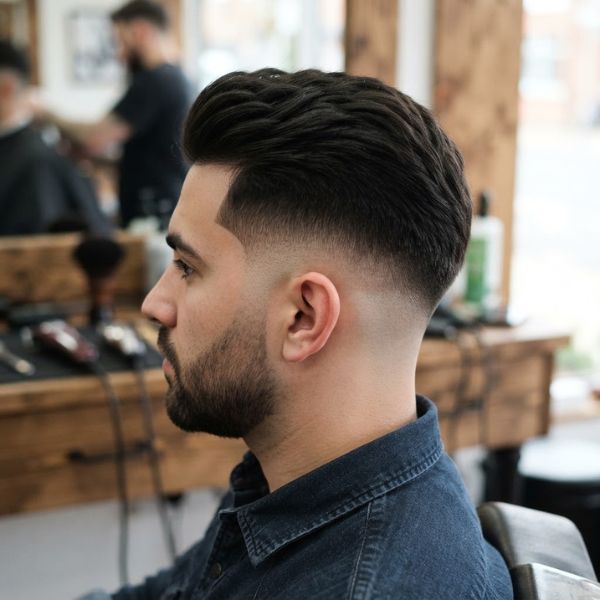
The classic version starts around the middle of the sides and gradually curves downward behind the ear.
The top is usually kept at a moderate length so the fade remains visible without becoming the only feature.
This is a strong starting point if you have never tried a drop fade.
Mid Drop Fade With Textured Crop
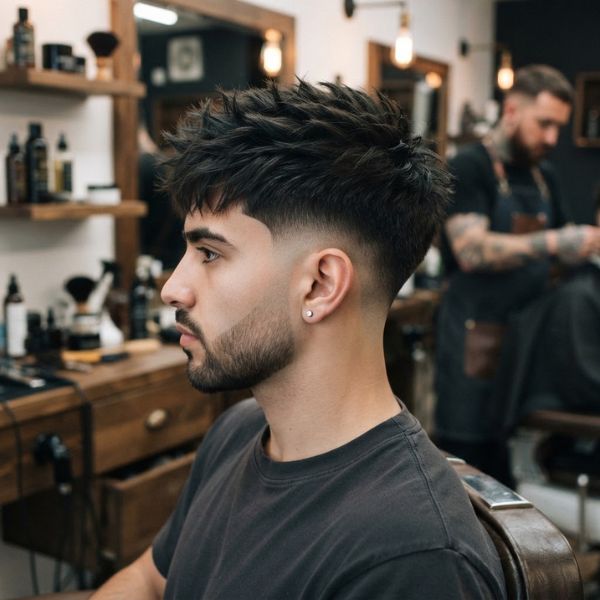
A textured crop gives the haircut a modern and low maintenance finish.
Keep the top short enough to style forward but long enough for visible texture.
A matte clay can emphasize the separation.
Mid Drop Fade With Curly Top
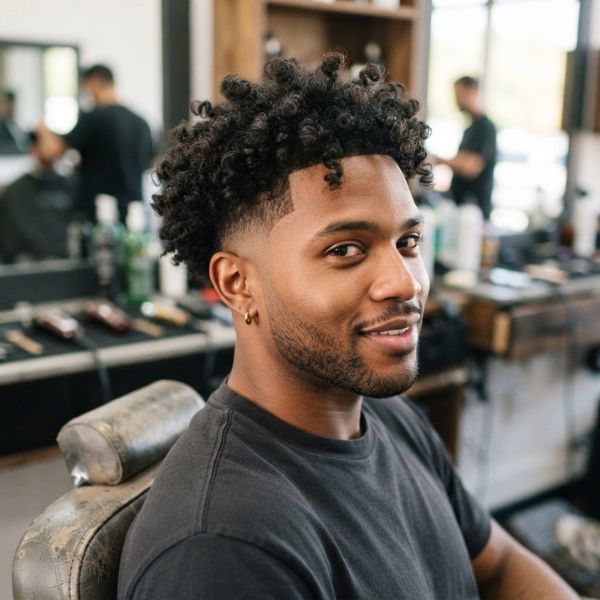
Curly hair creates strong contrast against the faded sides.
The top should retain enough length to allow the curls to form naturally.
This combination works especially well with dense curls because the curved fade removes bulk around the sides.
Mid Drop Fade With Waves
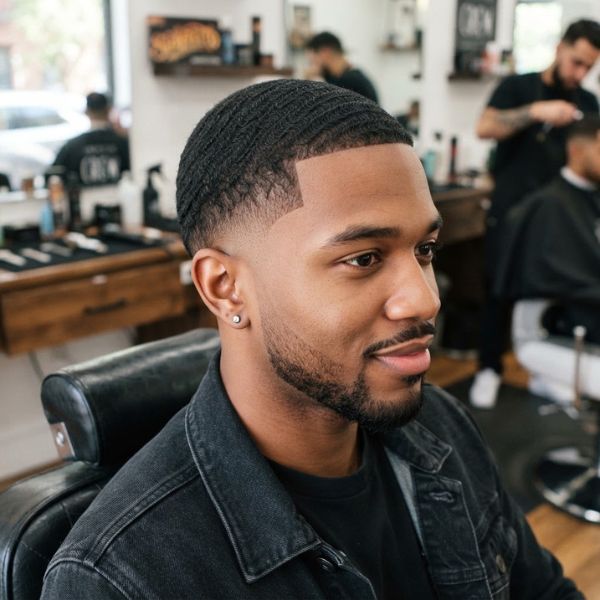
Waves create a natural textured surface on top.
The drop shape helps keep the sides clean while allowing the upper hair to retain its character.
A light styling product can help control flyaways without flattening the waves.
Mid Drop Fade With Quiff
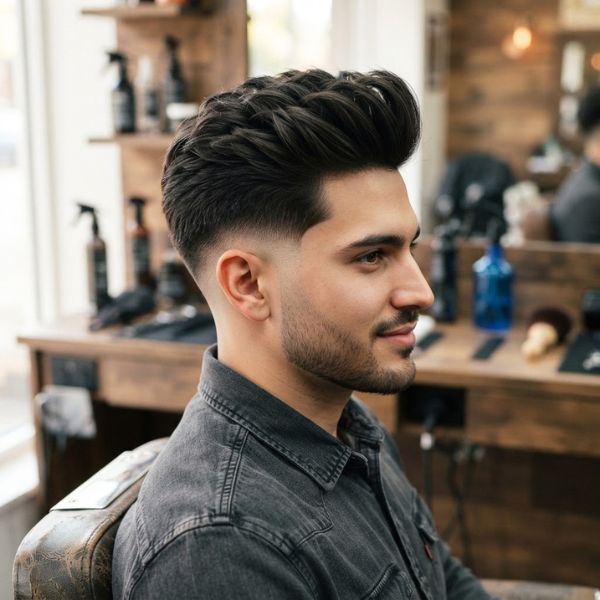
A quiff creates height at the front.
The combination of volume on top and a curved fade around the sides produces a strong profile.
This style requires more styling than a crop, but it offers greater visual height.
Mid Drop Fade With Comb Over
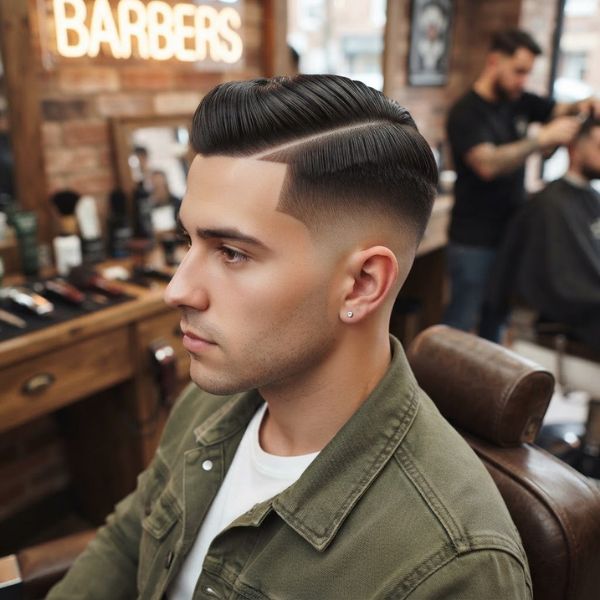
A comb over creates a classic appearance while the drop fade makes the sides contemporary.
This is a useful option for men who want a haircut that can work in both professional and casual settings.
Mid Drop Fade With Fringe
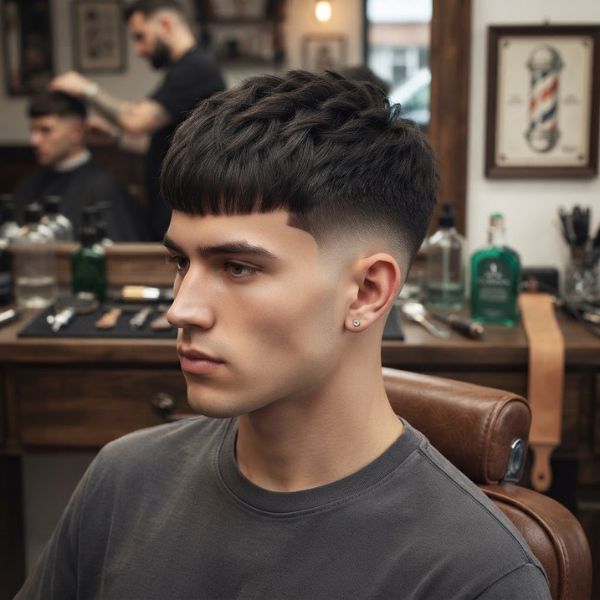
A fringe gives the haircut a younger and more relaxed appearance.
The fringe can be blunt, textured, or slightly uneven.
A textured fringe is usually easier to style naturally than an extremely precise straight line.
Mid Drop Fade With Beard
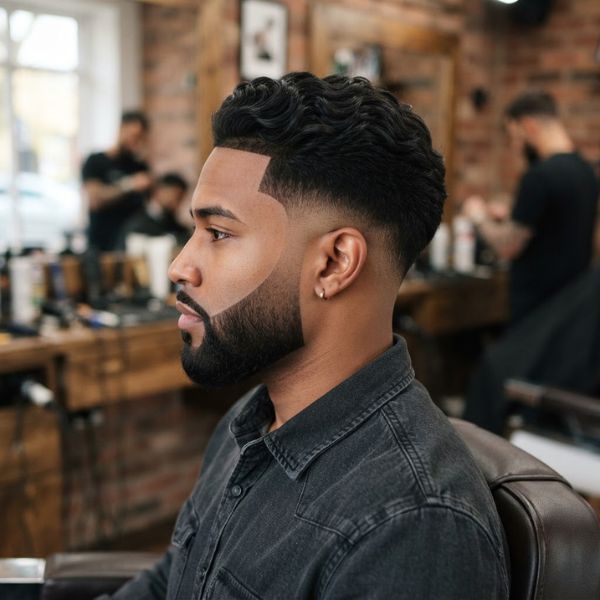
A beard can extend the visual structure of the haircut down toward the jaw.
The sideburn area can be blended into the beard for a smoother transition.
The beard length should complement the amount of volume on top.
Mid Drop Fade With Line Up
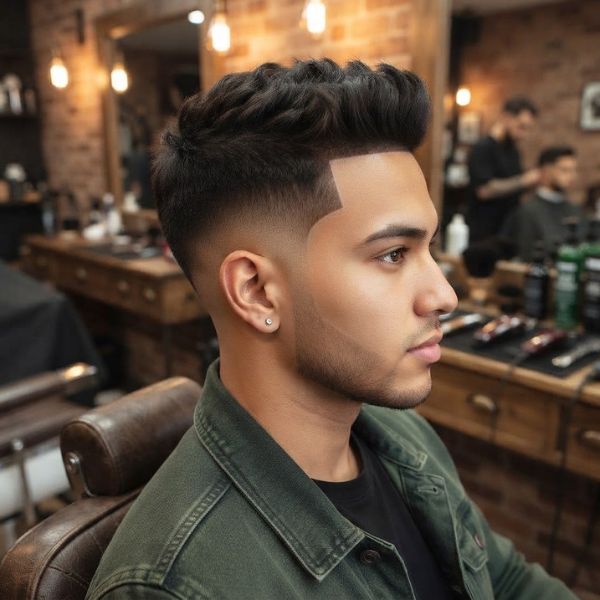
A line up adds precision around the forehead and temples.
It works particularly well with short tops, curls, crops, and waves.
Keep the line natural rather than forcing it too far forward.
Mid Drop Fade With Buzz Cut
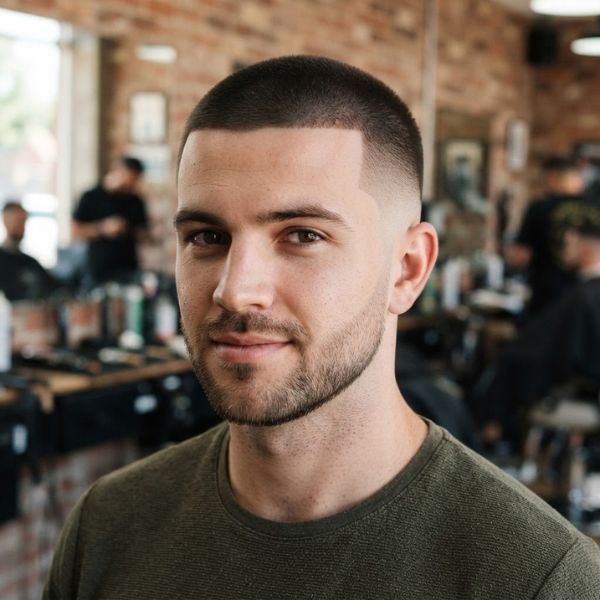
A buzz cut creates a minimalist version of the style.
Because the top is short, the curved fade becomes one of the main visual features.
This is a good option for men who want a simple haircut with some additional shape.
Mid Drop Fade With Slick Back
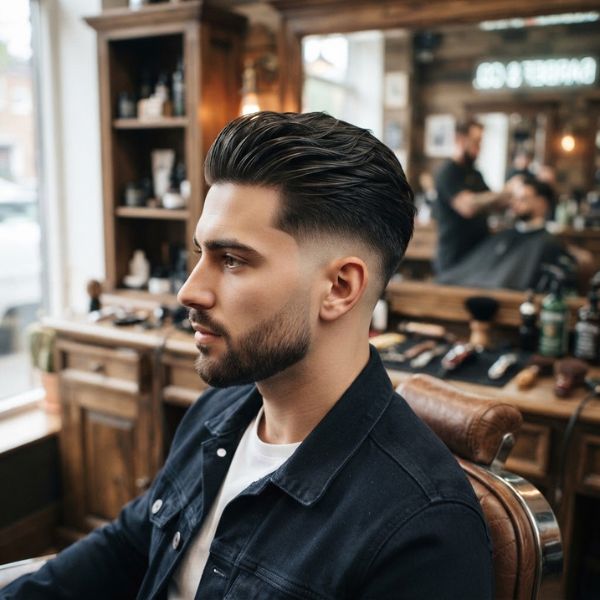
Longer hair can be styled backward to create a more polished appearance.
The curved fade adds modern contrast to the traditional slicked top.
This version requires more top length and regular styling.
Mid Drop Fade With Longer Textured Top
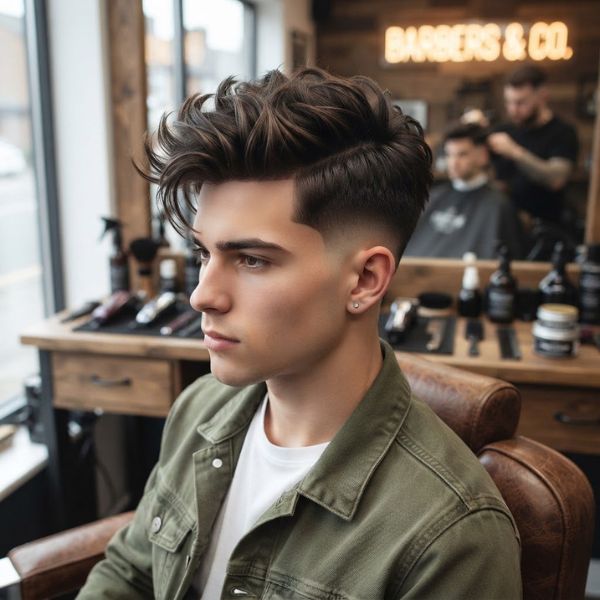
Leaving additional length on top gives you more styling flexibility.
You can wear the hair forward, backward, or slightly to the side.
This is a strong choice if you want one haircut that can be restyled in different ways.
Mid Drop Fade vs Mid Fade
This is one of the most important distinctions. A mid fade describes the height of the fade.
A drop fade describes the shape. A mid fade usually maintains a relatively level transition around the head. A mid drop fade begins at mid height but curves downward behind the ear.
The result is more rounded and follows the natural skull shape. If you want a straightforward, uniform fade, a mid fade may be better. If you want a curved silhouette that follows the head, choose a mid drop fade.
Mid Drop Fade vs Low Drop Fade
A low drop fade begins lower on the sides.
It provides less contrast and leaves more weight around the upper sides.
A mid drop fade starts higher and therefore creates a more noticeable transition.
Choose a low drop if you want:
- A subtle appearance
- More side coverage
- Softer contrast
- Easier grow out
Choose a mid drop if you want:
- More visible contrast
- A stronger silhouette
- A modern appearance
- More definition around the temples
Mid Drop Fade vs High Drop Fade
A high drop fade begins higher on the sides.
This creates stronger contrast and exposes more of the side of the head.
The mid version is more balanced.
For many men, a mid drop is a practical starting point because it provides visible shape without making the haircut excessively aggressive. Current style guides similarly describe the mid version as a middle ground between softer low drop styles and stronger high drop variations.
Mid Drop Fade vs Burst Fade
These cuts are sometimes confused because both involve curved lines.
A burst fade curves tightly around the ear and usually leaves more length toward the center back of the head.
A mid drop fade curves behind the ear and continues toward the nape.
The shapes create different silhouettes.
Choose a burst fade when you want the ear area to be the main focus.
Choose a mid drop when you want the curved fade to continue through the back.
Choosing the Fade Finish
The height is only one decision.
You also need to choose how short the fade becomes.
Skin Finish
A skin finish reaches the bare skin at the shortest point.
It creates the highest contrast and looks especially sharp when freshly cut.
Shadow Finish
A shadow finish leaves a small amount of visible hair.
It produces a softer appearance and can grow out more naturally.
Guarded Finish
A guarded fade retains more hair at the shortest point.
This is useful if you want the fade without a very exposed scalp.
The same mid drop shape can therefore look completely different depending on the finish.
How to Ask Your Barber for a Mid Drop Fade Haircut
Be specific.
A useful request could be:
“I want a mid drop fade. Start the fade around the middle of the sides, then drop it behind the ears toward the nape. Keep the top around four centimeters and add texture.”
If you want a skin finish, mention that separately.
For example:
“Make it a mid drop skin fade, with the shortest section taken to the skin.”
You should also show a side and rear reference photo because the drop is easiest to understand from those angles.
Recent barber guides specifically recommend showing rear and side references because a front-facing image cannot properly communicate the curved section behind the ear.
Mid Drop Fade for Different Hair Types
Straight Hair
Straight hair makes the fade transition highly visible.
Textured crops, side parts, quiffs, and slick backs work especially well.
Wavy Hair
Waves add natural movement.
A textured top can make the haircut appear fuller while the fade controls the sides.
Curly Hair
Curly hair creates a strong contrast with the fade.
Keep sufficient length on top so the curls do not lose their natural pattern.
Coily Hair
Coily texture can work beautifully with a mid drop.
A clean fade around the sides provides structure while the top retains natural density.
Thick Hair
Thick hair benefits from removing excess side weight.
Texturing the top can also make styling easier.
Fine Hair
A softer drop with moderate contrast can prevent the sides from looking excessively exposed.
Texture on top can provide additional visual movement.
Best Face Shapes for a Mid Drop Fade
Oval Face
Most versions can work because oval faces offer balanced proportions.
Round Face
Additional height on top can make the face appear longer.
Avoid excessive width around the sides.
Square Face
The fade can emphasize naturally strong facial angles.
A textured top can soften the overall shape.
Long Face
Avoid adding excessive height.
A moderate top length usually creates better proportions.
Heart Shaped Face
A fuller textured top can balance the forehead and chin.
The sides should not be taken excessively high unless a stronger contrast is specifically desired.
Styling a Mid Drop Fade Haircut
Styling depends mainly on what you keep on top.
For a Textured Crop
- Start with slightly damp hair.
- Blow dry the hair forward.
- Apply a small amount of matte clay.
- Separate the top with your fingers.
- Shape the fringe naturally.
For a Quiff
- Apply volumizing product.
- Blow dry the front upward.
- Shape the top with a brush or fingers.
- Finish with a small amount of matte paste.
For Curls
- Start with damp hair.
- Apply curl cream.
- Scrunch gently.
- Allow the curls to air dry or use a diffuser.
For a Slick Back
- Apply styling cream or pomade.
- Comb the hair backward.
- Keep the sides controlled.
- Use a small amount of finishing product if necessary.
How Often Should You Maintain a Mid Drop Fade?
Maintenance depends on the fade finish and your preferred sharpness.
A skin finish usually loses its contrast quickly as hair grows.
A shadow or guarded finish can look acceptable for longer.
You may want a touch up when:
- The curve behind the ear becomes difficult to see.
- The sides become bulky.
- The neckline grows out.
- The temple area loses definition.
- The top becomes difficult to shape.
Recent dedicated mid drop guides commonly recommend approximately two to three weeks for keeping a sharp fade, although individual growth rates vary.
Common Mid Drop Fade Mistakes
Taking the Fade Too High
If the fade is raised too much, the haircut may no longer have the balanced appearance you wanted.
It is easier to remove more hair later than to immediately correct a fade that was taken too high.
Confusing Mid Fade With Mid Drop
Make sure your barber understands that you want the fade to curve behind the ear.
Ignoring the Back of the Head
The drop is most visible from the side and rear.
Always check the back before leaving the barber.
Choosing the Wrong Finish
A skin finish is significantly more exposed than a shadow fade.
Tell your barber how much scalp visibility you want.
Cutting Curly Hair Too Short
Curly and coily hair can shrink considerably.
The barber should account for the natural curl pattern before deciding the final top length.
Is a Mid Drop Fade High Maintenance?
The haircut itself is not particularly difficult to style.
However, maintaining a sharp fade requires regular barber visits.
The top determines your daily styling time.
A short crop may take less than a few minutes, while a quiff or slick back can require more preparation.
The most important maintenance factors are:
- Regular fade touch ups
- Clean neckline
- Controlled sideburns
- Healthy top hair
- Appropriate styling product
- Correct styling technique
Mid Drop Fade With a Beard
A beard can make the haircut look more complete.
The fade can be connected into the sideburn and beard area, creating a continuous transition.
For a short beard, keep the blend subtle.
For a longer beard, the barber can gradually connect the haircut to the facial hair.
This combination works especially well when the top has moderate volume.
Why the Mid Drop Fade Looks Different on Every Person
No two heads have exactly the same shape.
Factors such as:
- Head curvature
- Ear position
- Hair density
- Hairline
- Crown shape
- Curl pattern
- Side volume
- Neckline shape
can all change the final appearance.
This is why a haircut copied from a photograph may not look identical on another person.
The best barber adapts the fade to the client’s natural head shape.
Frequently Asked Questions:
What is a mid drop fade haircut?
A mid drop fade haircut starts around the middle of the sides and curves downward behind the ears toward the nape.
Is a mid drop fade haircut the same as a mid fade?
No. A mid drop fade haircut combines mid height with a curved drop, while a standard mid fade usually maintains a more level transition.
Is a mid drop fade haircut good for curly hair?
Yes. A mid drop fade haircut can create strong contrast while keeping enough curly hair on top to showcase natural texture.
How long does a mid drop fade haircut last?
A mid drop fade haircut usually looks sharp for around two to three weeks, although growth rate and fade finish affect maintenance needs.
Is a mid drop fade haircut good for round faces?
Yes. A mid drop fade haircut can suit a round face when the top provides controlled height and the sides are kept relatively clean.
What should I tell my barber for a mid drop fade haircut?
Ask for a mid height fade that drops behind the ears, then specify your desired top length and whether you want a skin, shadow, or guarded finish.
Can you get a mid drop fade haircut with a beard?
Yes. A mid drop fade haircut can be blended naturally into a short, medium, or full beard.
Is a mid drop fade haircut better than a low drop fade?
Neither is universally better. A mid drop fade haircut offers more contrast, while a low drop creates a softer and more conservative appearance.
Conclusion
The mid drop fade haircut is a versatile choice because it combines two useful design elements: the medium starting height of a mid fade and the curved shape of a drop fade. That distinction gives the haircut a customized silhouette that follows the natural contour of the head. You can make the style subtle with a guarded or shadow finish, or more dramatic with a skin fade. The top can also be adapted to almost any preference, including textured crops, curls, waves, quiffs, fringes, comb overs, buzz cuts, and longer styles.
Getting the best result depends on communication and customization. Tell your barber exactly where you want the fade to begin, how low you want the curve behind the ear, and how much length you want to keep on top. A side and rear reference photo is especially useful because the defining drop is not fully visible from the front. With the right proportions, regular maintenance, and styling routine, a mid drop fade can deliver a clean, modern haircut that works across many hair types, face shapes, and personal styles.