
A taper fade textured fringe combines cleanly tapered sides with a layered, textured fringe that falls naturally toward the forehead. This haircut gives you a modern appearance without creating the extremely short contrast of a high fade. The textured fringe adds movement and dimension, making the style especially useful for straight, thick, or slightly wavy hair. You can also adjust the fringe length to create a softer or sharper finish.
One reason this haircut remains versatile is the number of ways you can customize it. Keep the taper subtle around the temples and neckline, add choppy layers to the fringe, or leave more length on top for additional styling options. You can wear it messy for a relaxed look or use a matte product for stronger definition.
What Is a Taper Fade Textured Fringe?
A taper fade textured fringe combines a gradual taper around the sides and neckline with a textured top and fringe.
The taper keeps the haircut clean around the edges without removing too much hair from the sides. The fringe is cut with layers and texture, allowing individual sections to move naturally instead of sitting as one solid block.
This makes the haircut look fuller, more dynamic, and easier to style.
Why Is the Textured Fringe Popular?
The textured fringe has become popular because it works with many hair types and face shapes.
The haircut offers:
- A clean but relaxed appearance
- Natural-looking texture
- Easy everyday styling
- Multiple fringe lengths
- Different taper options
- A modern barbershop finish
- Good versatility for casual and professional settings
You can also change the overall appearance simply by adjusting how the fringe falls.
15 Best Taper Fade Textured Fringe Styles
Short Textured Fringe With Taper
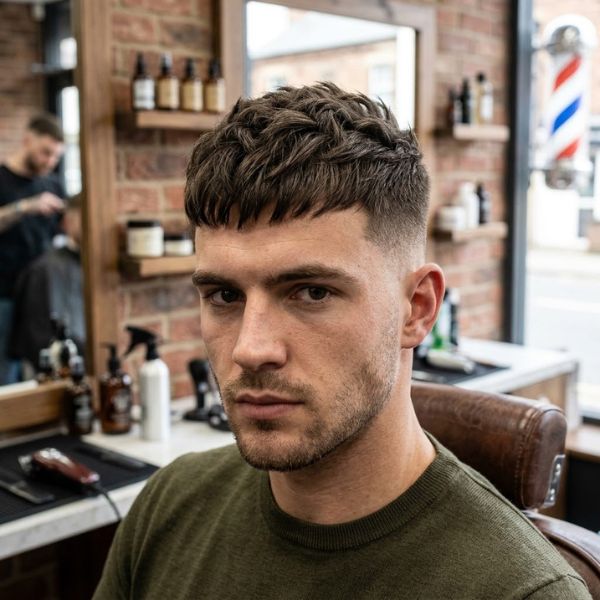
A short fringe is easy to maintain and works well for people who do not want hair constantly falling over their forehead.
Add subtle texture instead of making the front completely blunt.
Long Textured Fringe With Taper
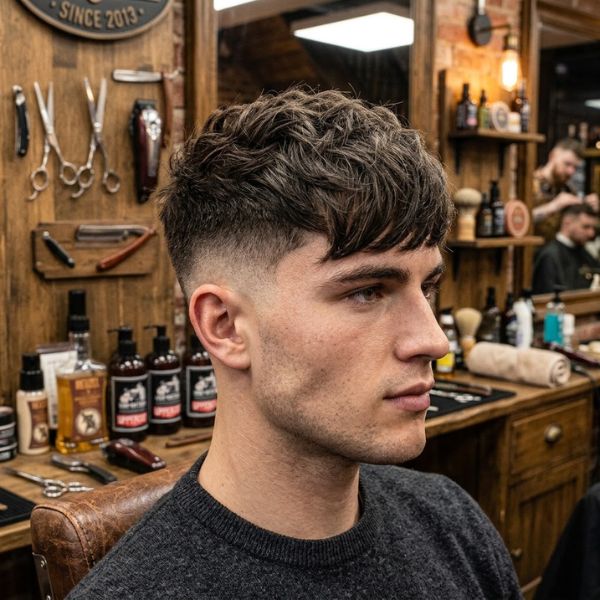
Keeping the fringe longer creates more styling flexibility. You can push it forward, sweep it slightly sideways, or create a loose curtain effect.
Messy Taper Fade Fringe
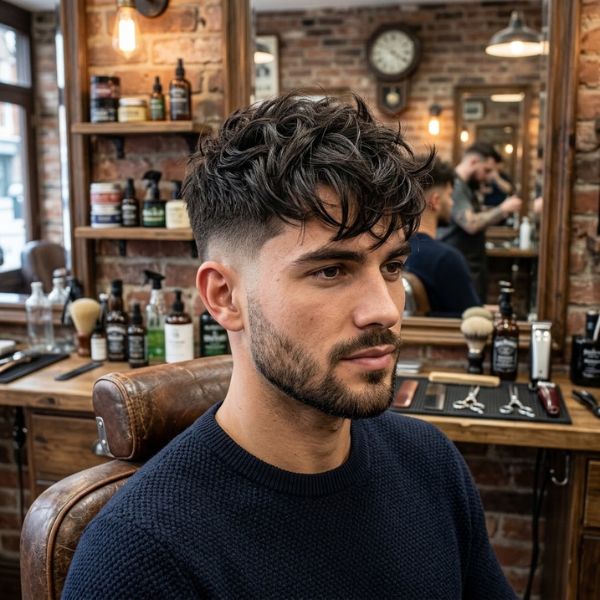
The messy version uses uneven texture to create an intentionally relaxed appearance.
Apply a small amount of matte clay and use your fingers to separate the hair instead of using a comb.
Straight Hair Textured Fringe
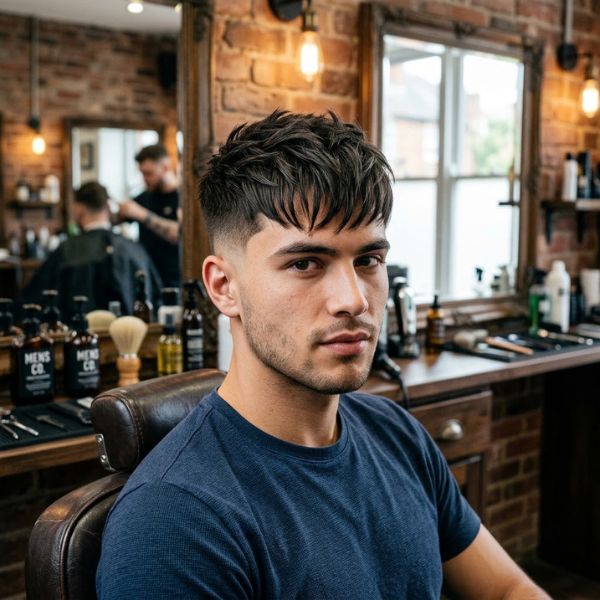
Straight hair can sometimes appear flat, so adding layers and texture creates more movement.
Ask your barber to preserve enough length for the fringe to fall naturally while removing excess weight.
Wavy Textured Fringe With Taper
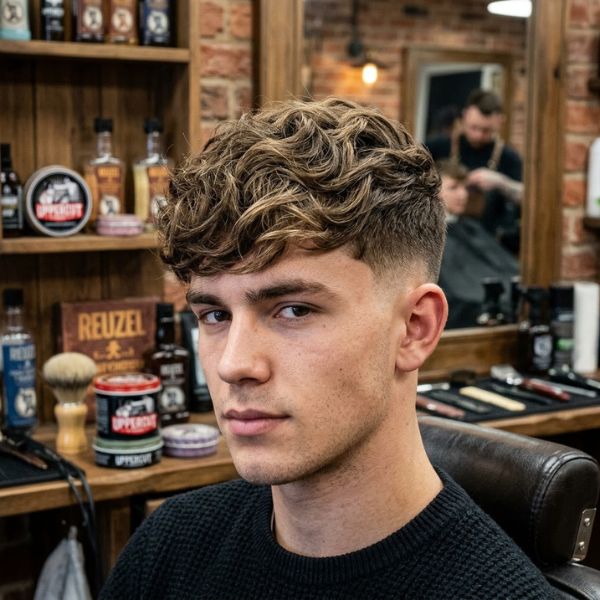
Natural waves can make a textured fringe look fuller without requiring much product.
A lightweight styling cream can help define the waves without making the hair stiff.
Curly Fringe With Taper
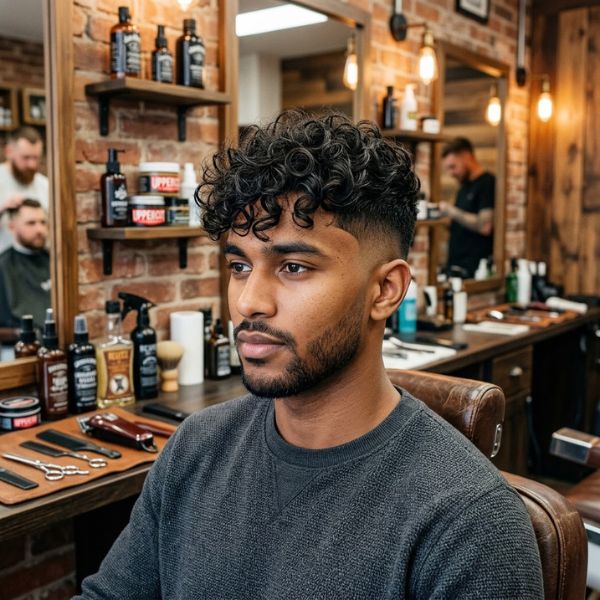
A taper works particularly well with curls because it keeps the edges controlled while allowing the natural curl pattern to remain visible.
Keep the fringe slightly longer if you want more definition around the forehead.
Textured Fringe With Skin Taper
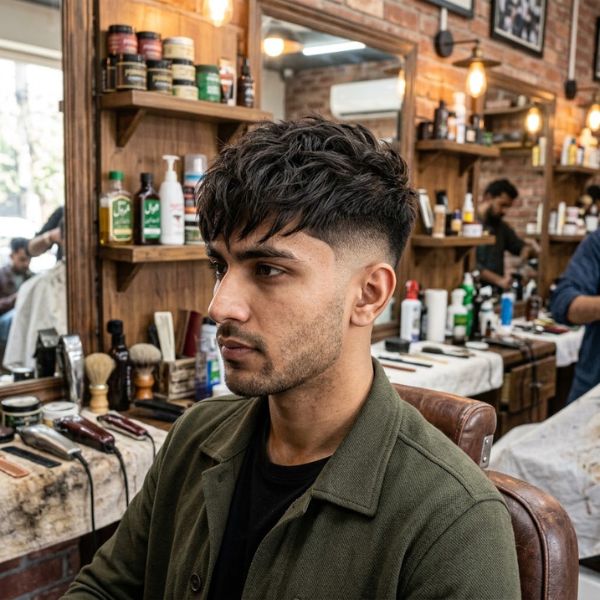
A very clean taper around the temples and neckline creates additional contrast without turning the entire side into a high fade.
This gives the haircut a sharper finish.
Textured Fringe With Side Sweep
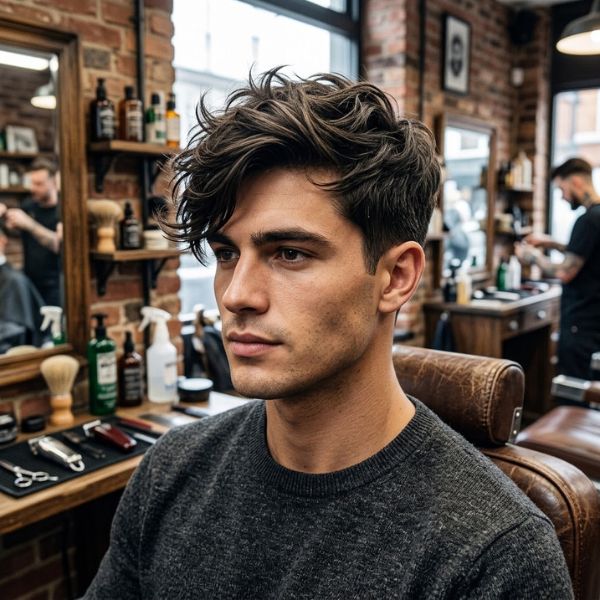
Instead of letting the fringe fall directly forward, sweep it slightly to one side.
This creates a more polished appearance while keeping the textured finish.
Choppy Fringe With Taper Fade
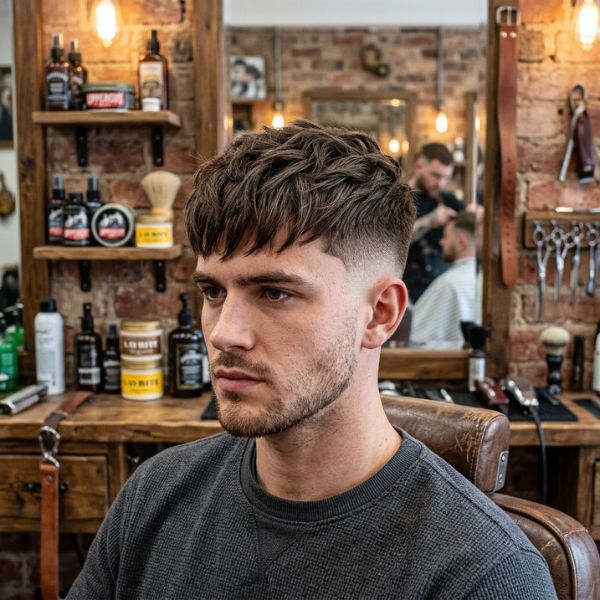
Choppy layers create visible separation between individual sections of the fringe.
This style works especially well for thick hair because the layers help reduce excess weight.
Textured French Crop With Taper
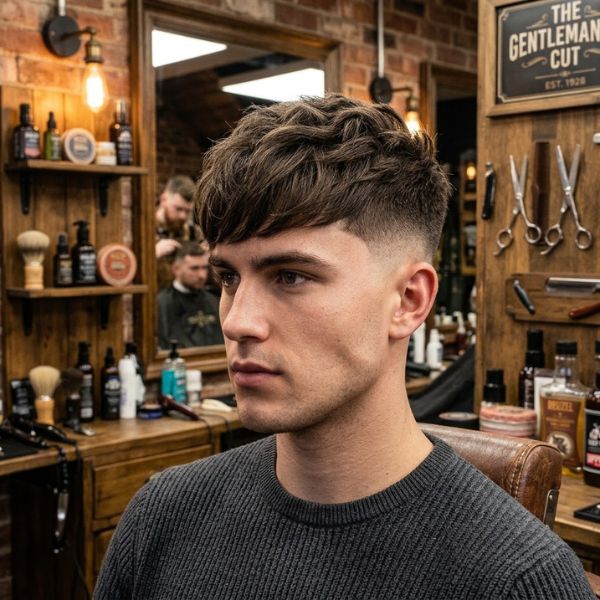
The French crop and textured fringe can create a compact, modern hairstyle.
Keep the fringe relatively short and use texture through the top for definition.
Taper Fade Fringe With Beard
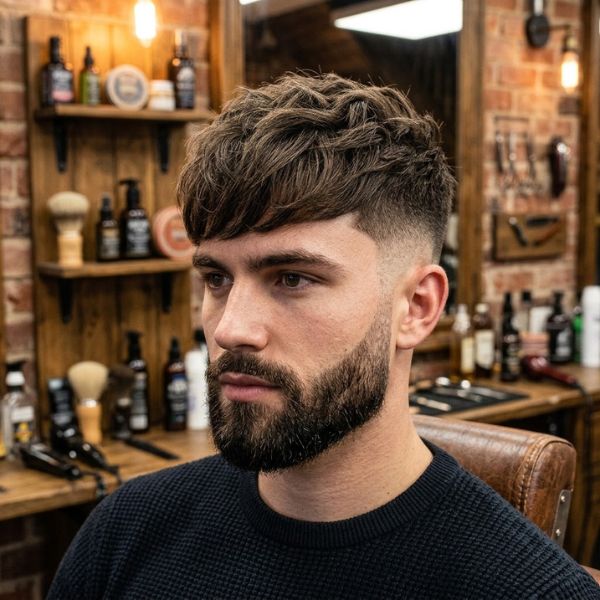
A beard adds structure to the lower face while the textured fringe draws attention toward the upper face.
Keep the beard edges clean for a balanced appearance.
Taper Fade Textured Fringe With Quiff
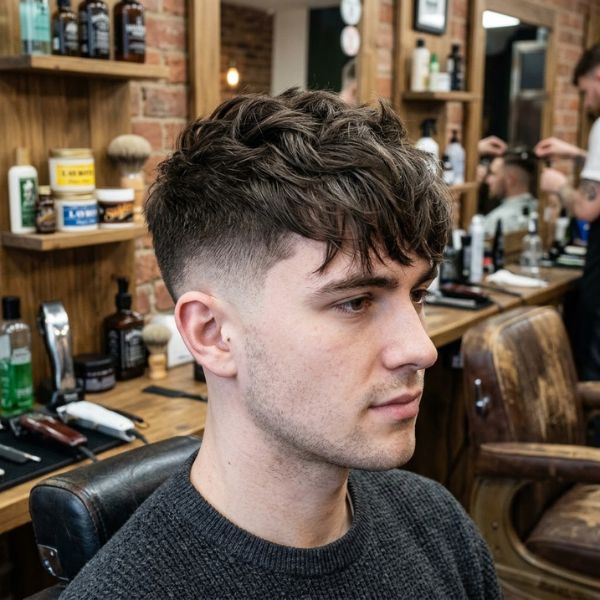
Leave extra length through the front and lift the fringe slightly to create a textured quiff.
This works well if you want more height while retaining the fringe-inspired shape.
Blonde Textured Fringe With Taper
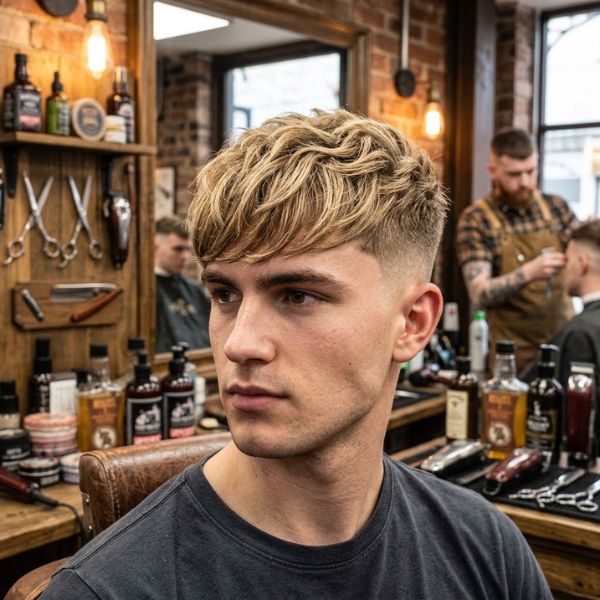
Blonde hair naturally highlights layers and texture.
A subtle taper keeps the sides clean while the lighter hair makes the textured top stand out.
Thick Hair Taper Fade Textured Fringe
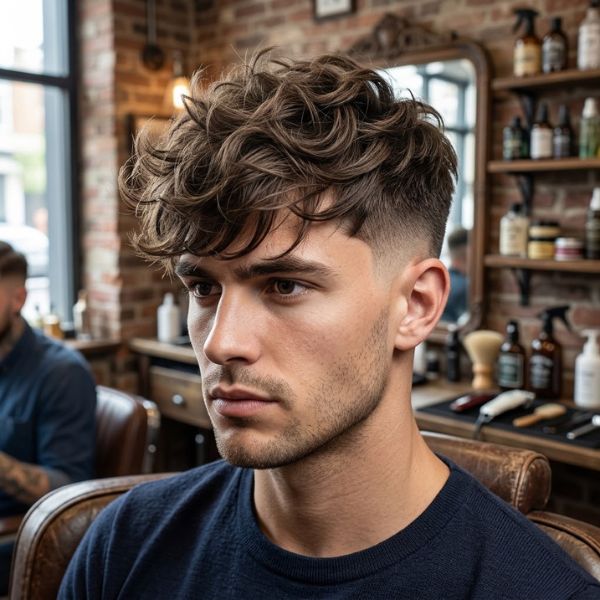
Thick hair provides plenty of volume for this haircut.
Ask your barber to remove weight strategically rather than excessively thinning the hair.
Fine Hair Taper Fade Textured Fringe
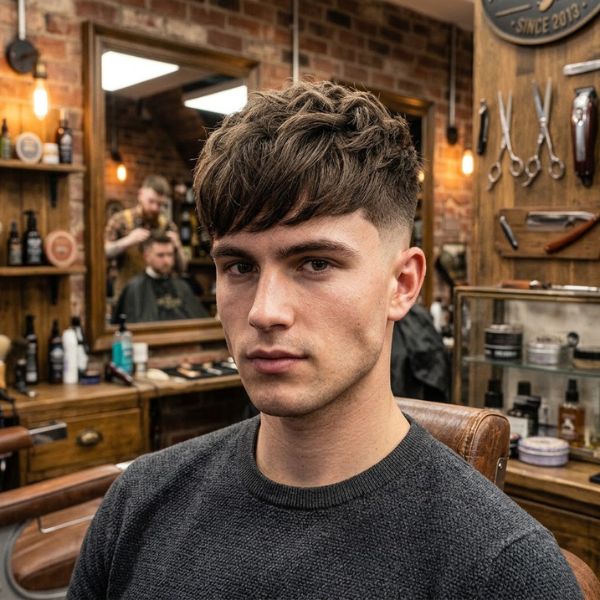
A textured fringe can also work with fine hair. Keep enough length on top to create fullness and use lightweight styling products.
Avoid heavy products that can make fine hair appear flat.
Taper Fade vs. Taper: What’s the Difference?
The terms can sometimes be confusing.
A taper gradually reduces the hair around the temples and neckline while leaving more length around the sides.
A taper fade creates a more noticeable transition from shorter hair into longer hair.
If you want a subtle and natural appearance, ask for a classic taper. If you want more contrast, a taper fade can provide a sharper result.
How to Ask Your Barber for a Textured Fringe
Tell your barber how much length you want to keep at the front and how short you want the taper.
You can say:
“I want a taper fade with a textured fringe. Keep enough length at the front to create natural separation, add layers through the top, and keep the taper clean around the temples and neckline.”
A reference photo is also useful because “textured fringe” can mean different things depending on the desired length and texture.
How to Style a Taper Fade Textured Fringe
The haircut does not require complicated styling.
Natural Finish
Apply a small amount of styling cream to damp hair. Use your fingers to arrange the fringe and allow it to dry naturally.
Matte Textured Finish
Apply matte clay or texturizing paste to dry hair. Separate small sections with your fingers to create definition.
Messy Finish
Use a lightweight styling product and move the fringe in different directions. Avoid making every strand perfectly uniform.
Sleek Finish
Use a small amount of styling cream and gently sweep the fringe to one side.
Best Hair Types for a Textured Fringe
The haircut works with several hair types.
Straight hair benefits from added layers because texture prevents the top from looking flat.
Wavy hair naturally creates movement and can make the fringe look fuller.
Curly hair can create a more distinctive version, especially when the taper keeps the sides controlled.
Thick hair benefits from strategic layering to reduce bulk.
Fine hair can work when the barber preserves enough length and avoids excessive thinning.
Best Face Shapes for a Taper Fade Textured Fringe
Oval Face
Most variations work well with an oval face. You can experiment with short or long fringe styles.
Round Face
A slightly textured and elevated top can add visual height. Keep excessive width away from the sides.
Square Face
A textured fringe can soften strong facial angles while the taper keeps the haircut structured.
Long Face
A fuller fringe can help reduce the appearance of extra length in the face.
Heart-Shaped Face
A textured fringe can balance a wider forehead and narrower chin.
How Often Should You Maintain It?
A taper fade textured fringe usually looks best when the edges remain clean.
A trim every 3–4 weeks can keep the taper sharp. If you prefer a more natural appearance, you can allow the sides to grow longer before returning to the barber.
The fringe may need trimming sooner if you want it to stay at a specific length.
Is a Textured Fringe Professional?
Yes, depending on the length and styling.
A short, controlled fringe with a subtle taper can look polished enough for many workplaces. A heavily choppy fringe with a messy finish creates a more casual appearance.
For a professional version, keep the texture controlled and avoid excessive length over the forehead.
Frequently Asked Questions:
Is a taper fade good with a textured fringe?
Yes. The taper creates clean edges while the textured fringe adds movement and personality.
Is a textured fringe good for straight hair?
Yes. Texture can add dimension and prevent straight hair from looking flat.
How long should a textured fringe be?
It depends on your preference. A short fringe is easier to maintain, while a longer fringe offers more styling options.
Does a textured fringe work with thick hair?
Yes. Layering can remove excess weight while preserving the natural volume of thick hair.
Can fine hair have a textured fringe?
Yes. Keep enough length on top and use lightweight products to create fullness without weighing the hair down.
How often should I get a taper fade?
Most people can maintain a sharp taper with a trim every three to four weeks.
Should I use wax or clay for a textured fringe?
Matte clay or texturizing paste usually works well when you want separation without excessive shine.
Final Thoughts
A taper fade textured fringe offers a strong balance between clean grooming and modern texture. The taper keeps the sides and neckline controlled, while the textured fringe gives the top movement and character.
You can choose a low taper for a softer appearance, a mid taper for more contrast, or a sharper finish around the edges. The fringe can also be short, long, messy, choppy, side-swept, or naturally wavy.
The best version depends on your hair type, face shape, preferred maintenance level, and personal style. Bring a reference photo to your barber and explain how much length you want at the front. With the right texture and proportions, this haircut can look modern, natural, and easy to style.