
The low fade haircut men style remains a popular choice for those who want a clean, versatile, and modern appearance. Its gradual blend starts close to the ears and neckline, creating a subtle transition while preserving more hair around the sides. This balanced design works with straight, wavy, curly, and thick hair. It can also complement textured crops, quiffs, side parts, fringes, slick backs, buzz cuts, and different beard styles.
Choosing the right fade involves more than deciding how short the sides should be. Hair texture, face shape, top length, hairline, lifestyle, and maintenance preferences all influence the final result. A soft fade can create a natural appearance, while a skin fade offers stronger contrast. Understanding these differences helps you communicate clearly with your barber and select a haircut that looks sharp, suits your features, and remains practical for everyday styling.
What Is a Low Fade Haircut Men?
A low fade is a men’s haircut in which the shortest part of the fade sits close to the ears and neckline. The hair then gradually becomes longer as it moves upward.
The key point is that low describes the position of the fade, not necessarily how short the hair becomes.
A low fade can be:
- A low taper-style fade with more hair left at the bottom
- A low fade that reaches a zero guard
- A low skin fade that reaches bare skin
- A low drop fade that follows the curve behind the ear
- A low fade connected to a beard
- A low fade combined with longer hair on top
This distinction is important because fade height and fade length are separate decisions. A low fade can be very short at the base or relatively soft and natural.
10+ Best Low Fade Haircut Men Styles
Here are some of the most versatile variations to consider before your next barber appointment.
Classic Low Fade
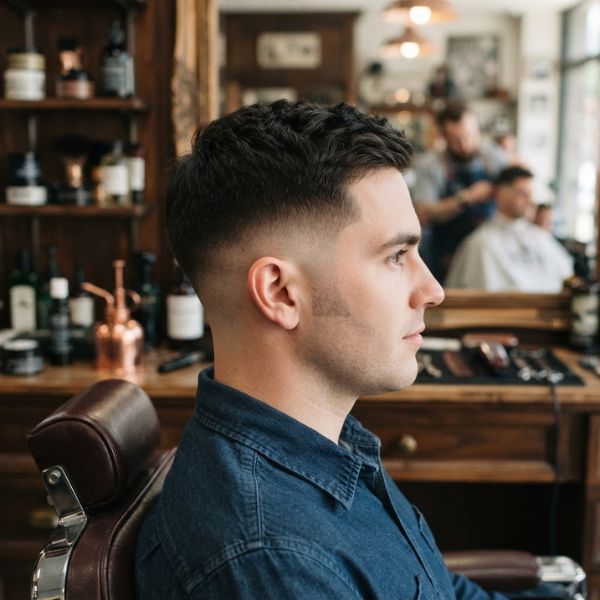
The classic low fade is the easiest starting point if you want a clean haircut without an aggressive appearance.
The sides gradually become shorter around the ears and neckline while the top remains long enough for simple styling.
It works especially well with:
- Straight hair
- Wavy hair
- Medium to thick hair
- Side parts
- Short textured tops
- Classic comb overs
This is also one of the safest options for professional environments.
Low Skin Fade
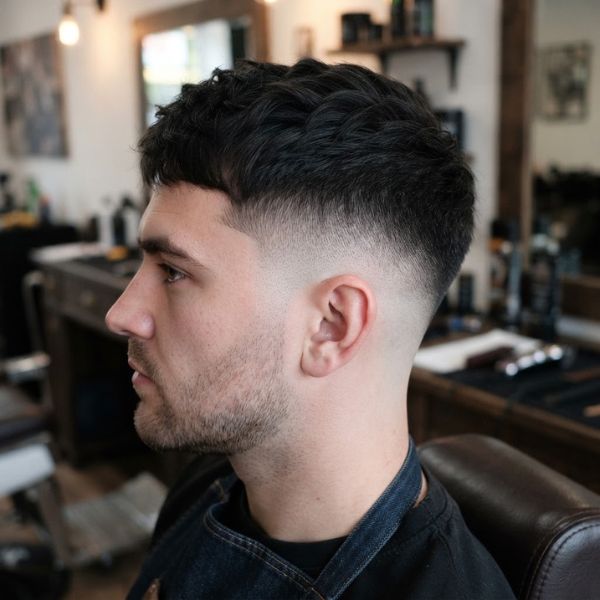
A low skin fade takes the shortest section down to bare skin around the lowest part of the sides and back.
The contrast is sharper than a traditional low fade, but the fade still begins low.
It can work particularly well with:
- Thick hair
- Dark hair
- Short textured styles
- Buzz cuts
- Curly tops
- Sharp line-ups
Because skin regrowth becomes visible sooner, this version usually needs more frequent maintenance than a softer low fade.
Low Fade With Textured Crop
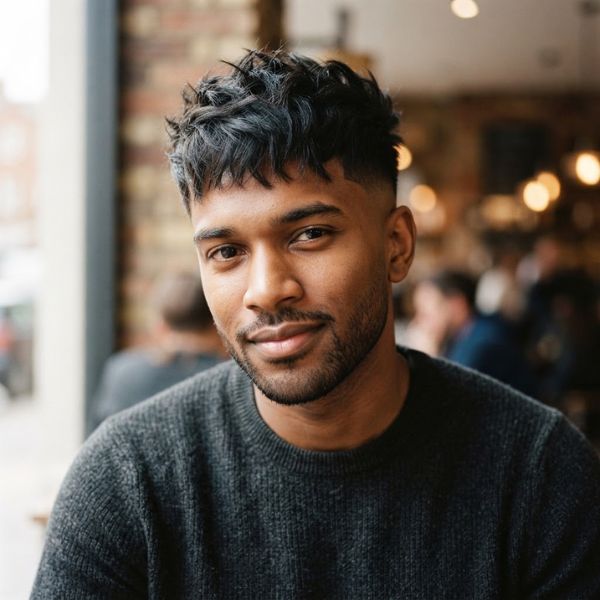
A textured crop combines short, deliberately uneven texture on top with a clean low fade.
This style is easy to wear because the texture does not need to look perfectly controlled.
For styling:
- Start with slightly damp or dry hair.
- Apply a small amount of matte clay or paste.
- Work the product through the top.
- Use your fingers to create separation.
- Leave the finish natural rather than overly polished.
This is a strong option for men who want a modern haircut with limited daily styling.
Low Fade With Side Part

A side part gives the low fade haircut men style a more traditional and polished appearance.
The top can be combed neatly to one side while the fade keeps the lower sides clean.
It is particularly suitable for:
- Office environments
- Business casual outfits
- Formal events
- Straight hair
- Medium-length hair
A natural side part often looks better than forcing a hard part where the hair does not naturally separate.
Low Fade With Quiff
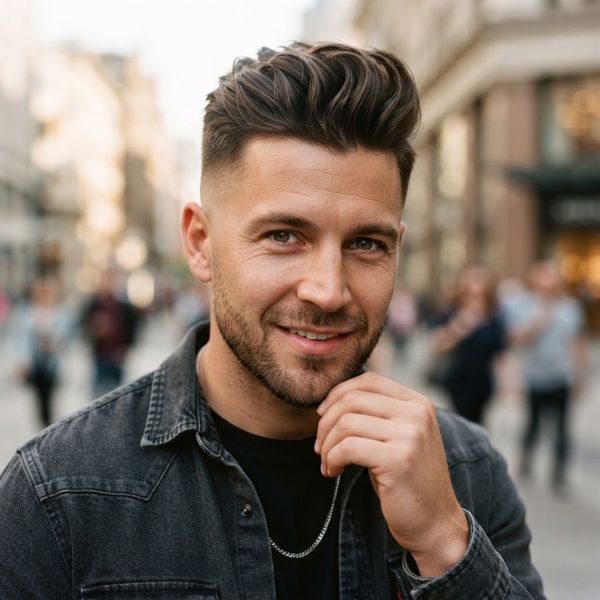
A quiff creates volume at the front while the low fade keeps the sides controlled.
This combination can add height and make the face appear longer, which can be helpful for men with rounder facial proportions.
For a fuller quiff, use a blow dryer to direct the front upward before applying a lightweight styling product.
Avoid making the sides too short if you want a softer, classic appearance.
Low Fade With Curly Hair

Curly hair can look excellent with a low fade because the fade controls the lower sides while allowing the curls to remain the main feature.
Unlike a high fade, the low placement preserves more visual weight around the sides.
For better results:
- Keep enough length for the curls to form properly.
- Use a curl cream or lightweight leave-in product.
- Avoid brushing dry curls aggressively.
- Let curls dry naturally when possible.
- Ask your barber to work with your natural curl pattern.
The final shape should follow the way your curls naturally grow.
Low Fade With Wavy Hair
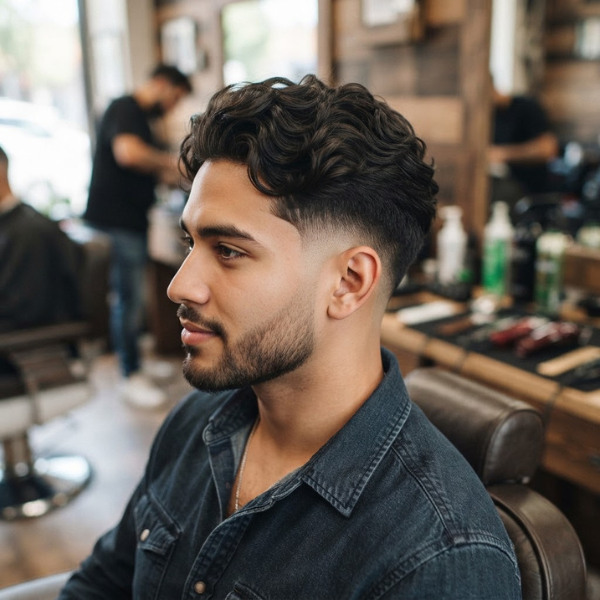
Wavy hair provides natural movement without requiring heavy styling.
A low fade can clean up the area around the ears and neckline while leaving the waves visible through the top.
A lightweight styling cream or sea salt spray can enhance texture without making the hair look stiff.
This style works particularly well when you want a relaxed but groomed appearance.
Low Fade With Buzz Cut
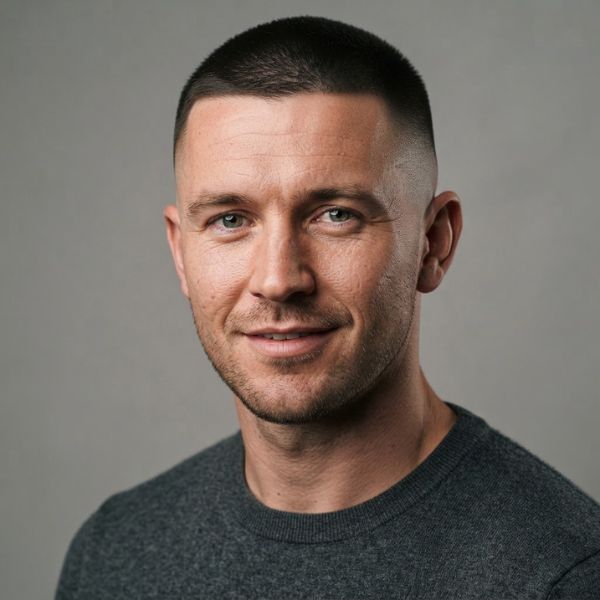
A buzz cut with a low fade is a practical choice for men who want minimal styling.
The top remains short, while the fade adds definition around the sides.
Benefits include:
- Very little styling time
- Simple daily maintenance
- Clean appearance
- Stronger head shape definition
- Easy grooming routine
If you are unsure about going extremely short, ask your barber to leave slightly more length on top first.
Low Fade With Slick Back

Men with longer hair can combine a low fade with a slick-back hairstyle.
The longer top creates a classic silhouette, while the low fade prevents the sides from becoming too bulky.
A styling cream provides a natural finish, while pomade can create a shinier and more structured result.
This style works best when the top has enough length to move backward naturally.
Low Fade With Fringe
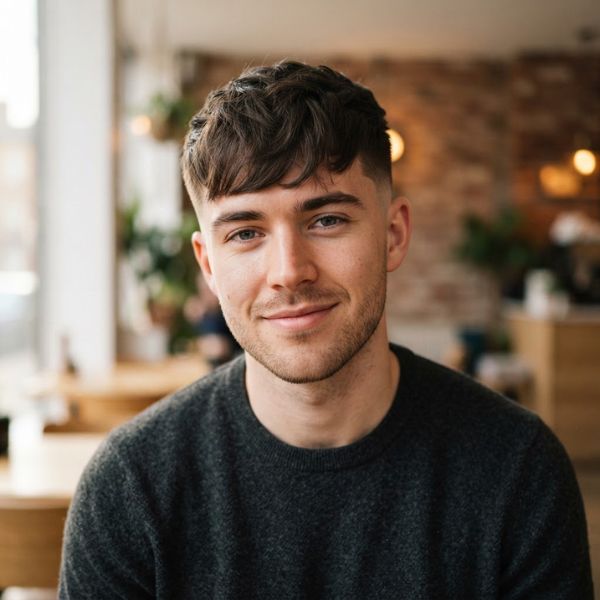
A fringe creates a youthful and contemporary appearance.
The front can be cut:
- Straight
- Textured
- Choppy
- Curved
- Slightly messy
A textured fringe generally requires less precision during daily styling than a completely straight fringe.
Your barber can adjust the fringe according to your forehead, hairline, and curl or wave pattern.
Low Drop Fade
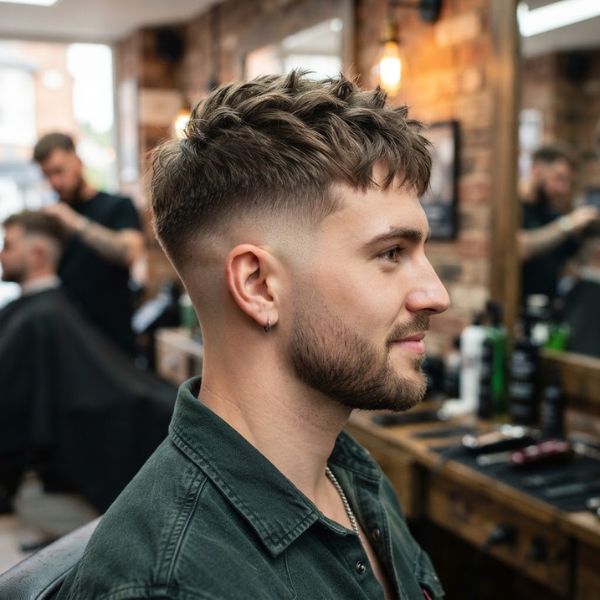
A low drop fade follows the natural curve of the head and drops lower behind the ear.
Instead of creating a relatively straight fade line, the transition curves toward the neckline.
This variation can look especially natural with curly or textured hair because the shape follows the head more closely.
Low Fade With Beard
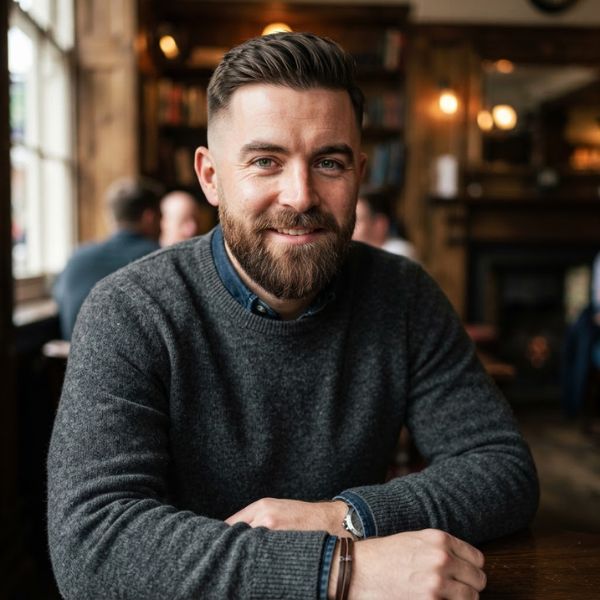
A beard can add structure to the lower half of the face and create a natural continuation from the haircut.
You can combine a low fade with:
- Stubble
- Short beard
- Medium beard
- Full beard
- Faded sideburns
Tell your barber whether you want the fade connected to the beard or separated by a softer sideburn transition.
Low Fade Haircut Men by Hair Type
The best haircut is not determined by the fade alone. Your natural hair texture affects how the top should be shaped.
Straight Hair
Straight hair works well with:
- Side parts
- Slick backs
- Quiffs
- Textured crops
- Combs over
- Short fringes
A matte product can add texture if straight hair tends to look flat.
Wavy Hair
Wavy hair benefits from a haircut that preserves natural movement.
Avoid over-thinning the top if you want the waves to remain defined.
Curly Hair
Curly hair generally needs enough length to maintain its natural curl pattern.
A low fade can reduce unwanted bulk without removing too much hair around the sides.
Thick Hair
Thick hair often benefits from removing weight strategically rather than simply cutting everything short.
Your barber can use texture or scissor work on top while keeping the fade low.
Fine Hair
Fine hair can benefit from a shorter textured top.
Avoid heavy products that flatten the hair. A lightweight matte product can provide separation and volume.
Low Fade Haircut Men for Different Face Shapes
Face shape can help guide the top style and fade placement, but it should not be treated as a strict rule.
Round Face
A little extra height on top can create a longer visual line.
Good options include:
- Quiff
- Textured top
- Short pompadour
- Side-swept top
Avoid adding excessive width around the sides if you want a more elongated appearance.
Long or Oblong Face
A low fade can preserve some side weight, which may help balance a longer face.
A flatter textured top or side part can work better than excessive height.
Square Face
A square face can support many versions of the low fade.
A textured top can emphasize natural facial angles while keeping the haircut modern.
Oval Face
Oval faces generally provide considerable flexibility.
You can experiment with:
- Crops
- Quiffs
- Side parts
- Curly tops
- Slick backs
- Fringes
Heart-Shaped Face
Keeping some visual weight through the upper sides can help balance a narrower chin.
A moderate top length often works better than an extremely short haircut.
Face shape is only one consideration. Head shape, hair density, hairline, beard, and preferred maintenance schedule can change the best fade placement.
Low Fade vs Mid Fade vs High Fade
Understanding the three main fade heights makes choosing your haircut easier.
| Fade | Starting Point | Overall Look | Best For |
| Low fade | Close to the ears | Subtle and classic | Professional and versatile styles |
| Mid fade | Around the middle sides | Balanced and noticeable | Modern textured styles |
| High fade | Higher on the sides | Bold and high contrast | Dramatic short hairstyles |
A low fade preserves more side weight. A mid fade creates a stronger transition, while a high fade removes more hair from the upper sides.
Your choice should depend on your top hairstyle, face proportions, hair density, and how frequently you want to visit the barber.
Low Fade vs Low Taper
These terms are sometimes used interchangeably, but they are not always the same.
A low taper generally keeps more of the natural shape of the sides and focuses the shortening around the temples and neckline.
A low fade usually creates a more noticeable gradient across the lower sides.
Choose a low taper if you want:
- A very natural appearance
- More side weight
- A subtle change
- Longer grow-out
Choose a low fade if you want:
- More visible blending
- Cleaner contrast
- A sharper side profile
- More definition around the ears
If you are unsure, show your barber a reference photo and explain how much hair you want preserved.
How to Ask Your Barber for a Low Fade
Simply saying “give me a low fade” leaves several important details unanswered.
A better barber consultation covers four areas.
1. Explain the Fade Height
Say that you want the fade to start close to the ears and remain low.
If you do not want it to become a mid fade, point to the area where you want the transition to begin.
2. Explain the Shortest Length
Decide whether you want:
- Bare skin
- Zero
- Half guard
- Number 1
- A softer starting length
Remember that fade height and fade length are separate choices.
3. Explain the Top
Tell your barber whether you want:
- A textured crop
- Side part
- Quiff
- Fringe
- Curls
- Slick back
- Buzz cut
- Longer natural texture
4. Bring a Reference Photo
A side or three-quarter photograph can be more useful than a front-facing picture because fade placement is easiest to judge from the side.
Current barber guidance consistently recommends showing the desired fade height, top length, and finish rather than relying on the haircut name alone.
A Simple Barber Script
If you are not sure what to say, try:
“I want a low fade starting just above the ear. Keep the transition low, leave enough length on top for a textured style, and keep the neckline clean. I will show you the reference photo.”
If you want a skin fade, specify that separately.
For example:
“I want a low skin fade, but keep the top around two inches and leave enough texture for styling.”
You do not need to know every clipper guard number. Describing the result you want can be more useful than guessing technical measurements.
How Long Does a Low Fade Stay Fresh?
The exact grow-out period depends on hair growth, fade length, and how sharp you want the haircut to remain.
A softer low fade can often grow out more naturally than a high-contrast skin fade.
As a general guide:
- Soft low fade: around 3 to 4 weeks
- Low skin fade: around 2 to 3 weeks
- Very sharp fade or line-up: around 1 to 2 weeks for a highly polished appearance
These are practical ranges rather than fixed rules. Some men prefer the natural grown-out stage, while others want their fade extremely sharp.
How to Maintain a Low Fade
You do not need a complicated routine.
For the Hair
- Wash according to your hair type.
- Use conditioner when appropriate.
- Avoid excessive heat.
- Use styling products sparingly.
- Keep the top trimmed to maintain its intended shape.
For the Fade
- Schedule regular barber visits.
- Keep the neckline clean.
- Do not attempt to recreate the fade with a clipper unless you know how to blend it.
- Refresh the sideburns when needed.
- Maintain the beard connection if you wear facial hair.
A professional barber is usually the best choice for preserving a smooth fade because blending multiple lengths requires precision.
Common Low Fade Mistakes
Asking for a Fade Without Explaining the Height
“Fade” can mean different things to different people.
Always specify that you want the fade low.
Confusing Fade Height With Fade Length
A low fade can reach the skin or stop at a longer clipper length.
These are separate decisions.
Showing Only a Front Photo
The front view does not always reveal how high the fade sits.
Show a side or rear reference when possible.
Choosing a Style That Fights Your Hair Texture
Your natural hair pattern matters.
A cut designed for straight hair may not behave the same way on tight curls or thick waves.
Cutting Too Much Off Initially
If you are uncertain about length, start slightly longer.
Your barber can always remove more hair, but cannot immediately put it back.
Why Low Fade Haircut Men Styles Remain Popular
The low fade haircut men category continues to work because it combines a traditional silhouette with modern barbering.
It can be:
- Subtle enough for professional settings
- Stylish enough for casual outfits
- Adaptable to different hair textures
- Easy to combine with facial hair
- Customized for different face shapes
- Worn with short or long hair
- Adjusted for different maintenance schedules
Rather than being one specific haircut, the low fade is a foundation that can support many different styles.
Quick Guide: Which Low Fade Should You Choose?
Use this simple guide before your appointment.
For a professional look:
Choose a classic low fade with a side part or neat textured top.
For low maintenance:
Try a low fade with a crew cut or buzz cut.
For curly hair:
Keep enough length on top and use a low fade to control the sides.
For thick hair:
Use a low fade with strategic texturing on top.
For a modern look:
Try a textured crop, fringe, or messy top.
For stronger contrast:
Choose a low skin fade.
For a natural appearance:
Consider a softer low fade or low taper.
Frequently Asked Questions:
What is the best low fade haircut men style?
The best low fade haircut men style depends on your hair texture, face shape, top length, and desired maintenance. A classic low fade is the most versatile starting point.
Is a low fade good for men with thick hair?
Yes. A low fade haircut men style can remove excess bulk around the ears and neckline while preserving enough weight on top for styling.
Is a low fade good for curly hair?
Yes. A low fade haircut men style works well with curls because it cleans the sides while allowing the natural curl pattern to remain visible on top.
How often should men get a low fade?
Most men can refresh a low fade haircut men style every 2 to 4 weeks, depending on how sharp they want the fade and how quickly their hair grows.
Is a low fade better than a mid fade?
Neither is universally better. A low fade haircut men style is more subtle, while a mid fade creates stronger contrast and a more noticeable transition.
What should I tell my barber for a low fade?
Tell your barber where you want the fade to start, how short you want the base, what length you want on top, and whether you want a natural or sharp finish.
Can a low fade work with a beard?
Yes. A low fade haircut men style can connect naturally into stubble or a beard, creating a continuous and well-groomed appearance.
Does a low fade suit a round face?
Yes. A low fade haircut men style can work with a round face, especially when the top has moderate height or texture to create a longer visual shape.
What is the difference between a low fade and low taper?
A low fade creates a more noticeable gradient across the lower sides, while a low taper usually preserves more side weight and focuses the blend around the temples and neckline.
Is a low skin fade high maintenance?
A low skin fade requires more frequent touch-ups than a softer fade because the bare skin and strong contrast make regrowth easier to notice.
Conclusion
The low fade haircut men style offers an excellent combination of classic grooming and modern versatility. Its low placement creates a cleaner outline without removing too much visual weight from the sides. Whether you prefer curls, waves, straight hair, a textured crop, side part, quiff, fringe, or slick back, the fade can be customized around your natural texture and preferred length. This makes it suitable for casual, professional, and formal settings.
Before your next barber appointment, consider your face shape, hair density, styling routine, and desired maintenance schedule. Decide whether you prefer a soft blend, sharper skin fade, or natural taper effect, then bring a clear reference image to explain your expectations. Regular trims, suitable styling products, and proper hair care will keep the haircut looking fresh. With thoughtful customization, a low fade can become a dependable style that combines comfort, confidence, and contemporary appeal.